HACO’s Chasing Zero Initiative Drives Climate Action in Kenya Through Clean Energy and Waste Reduction
Read more

With only 17% of global targets under the Sustainable Development Goals (SDGs) 2030 Agenda currently on track—including those addressing responsible production, consumption, and climate action—Kenya’s HACO Industries is stepping up with a bold sustainability plan aimed at changing this trajectory.
To drive its sustainability agenda, HACO Industries, a personal and home care fast-moving consumer goods (FMCG) company in Kenya that has been a participant of the UN Global Compact since 2007, developed the Chasing Zero Initiative (CZI), which it says will build sustainable business by focusing on delivering value through the triple bottom line: the People, Planet & Profit approach, which by extension will help combat environmental crises.
The Chasing Zero Initiative (CZI) is built on three interconnected pillars:
- Zero Waste – Eliminating waste at the source through in-house recycling, reusing materials, and implementing extended producer responsibility mechanisms to recover post-consumer packaging waste.
- Zero Harm – Fostering a workplace culture committed to employee safety and minimizing environmental harm across operations in close alignment with the Kenya Bureau of Standards (KEBs) and EU Cosmetics regulations.
- Net Zero – Identifying and reducing greenhouse gas emissions across operations through science-based targets, renewable energy adoption, and carbon offsetting.
The CZI is a culmination of a five (5)-year business strategy on realizing sustainable manufacturing and products by generating operational pillars under governing SDGs.
This follows HACO’s participation in the Climate Ambition Accelerator (CAA), a six-month programme that equips companies with the knowledge and tools to set science-based emissions reduction targets aligned with the 1.5°C pathway. It also builds on HACO’s longstanding engagement with the UN Global Compact and active role within the UN Global Compact Network Kenya, demonstrating its commitment to responsible and sustainable business practices. Additionally, HACO’s involvement in the Africa Business Leaders Coalition (ABLC) reinforces its leadership in advancing climate action across the continent.
Zero Waste
Every year, HACO recycles approximately 217 tonnes of plastics, which are reintroduced back into the manufacturing process. This averages 18,000 kilograms of recyclable feedstock recovered every month. The company also produces an average of 85,000 kilograms of plastic packaging a month, meaning the recycled material constitutes 21% of total production fractions.
In realization that waste generation is inevitable during manufacturing, as part of CZI, HACO has instituted an in-house recycling mechanism through the installation of online grinders at moulding stations and an offline grinding section.
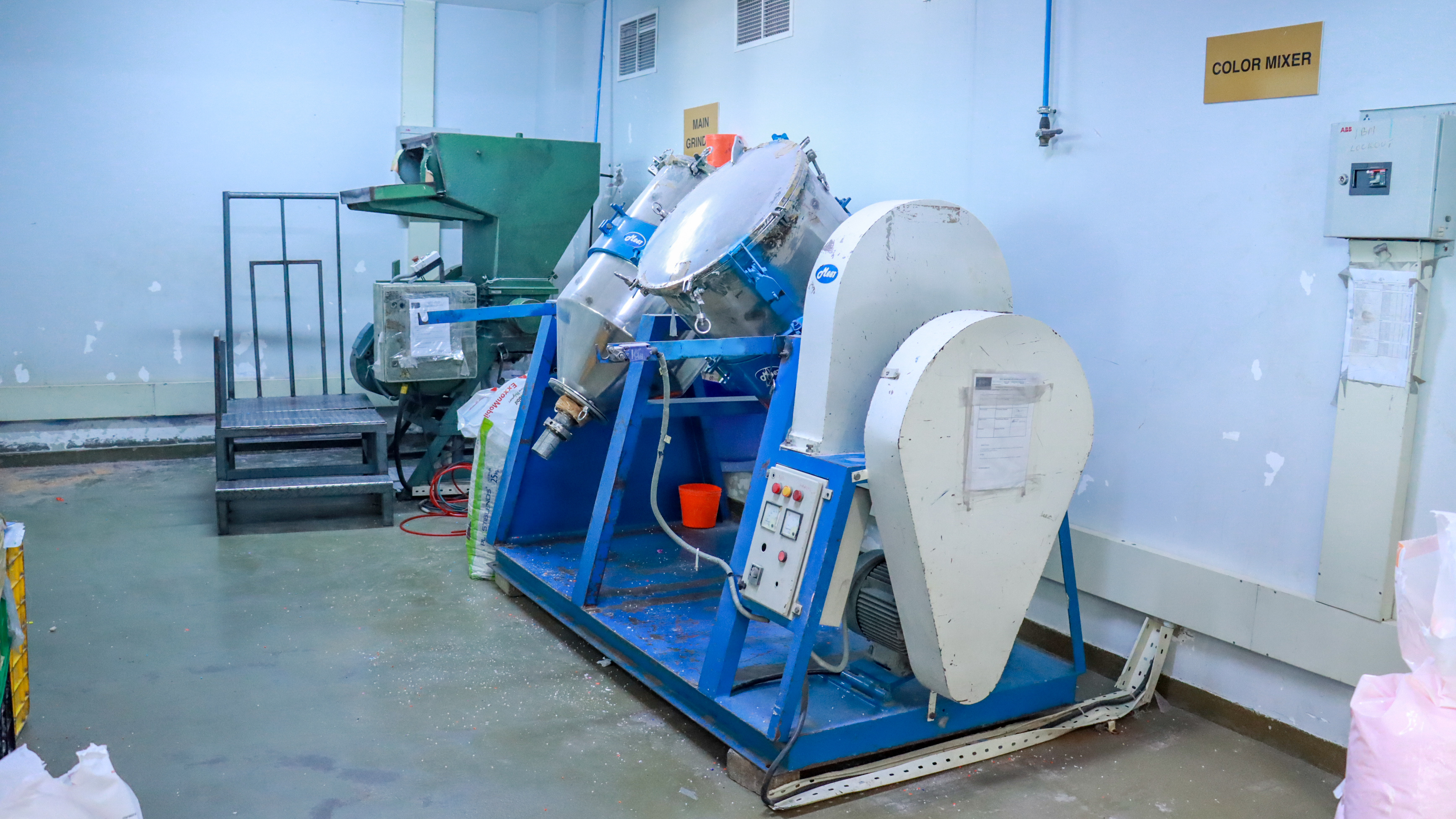
Offline grinder and mixer for recyclable feedstock at HACO Industries
For plastics that cannot be recycled onsite and paper waste, HACO has partnered with Progreen Innovations, a waste-to-energy converter that generates alternative energy solutions in terms of poly-diesel and poly-petrol. These fuels are made from plastics, paper and biomass and have reduced carbon and sulphur content compared to conventional fossil fuels. HACO offsets its waste to Progreen, then recovers it in the form of eco-diesel, which is used to run the factory’s steam boilers with the intention to scale up usage to generators.
Net Zero
HACO recognises the significant role the manufacturing sector plays in greenhouse gas emissions and is actively working to measure, reduce, and offset its own emissions. The company has already developed its Greenhouse Gas (GHG) Inventory covering Scope 1 and 2 emissions and is currently establishing a framework to account for Scope 3.
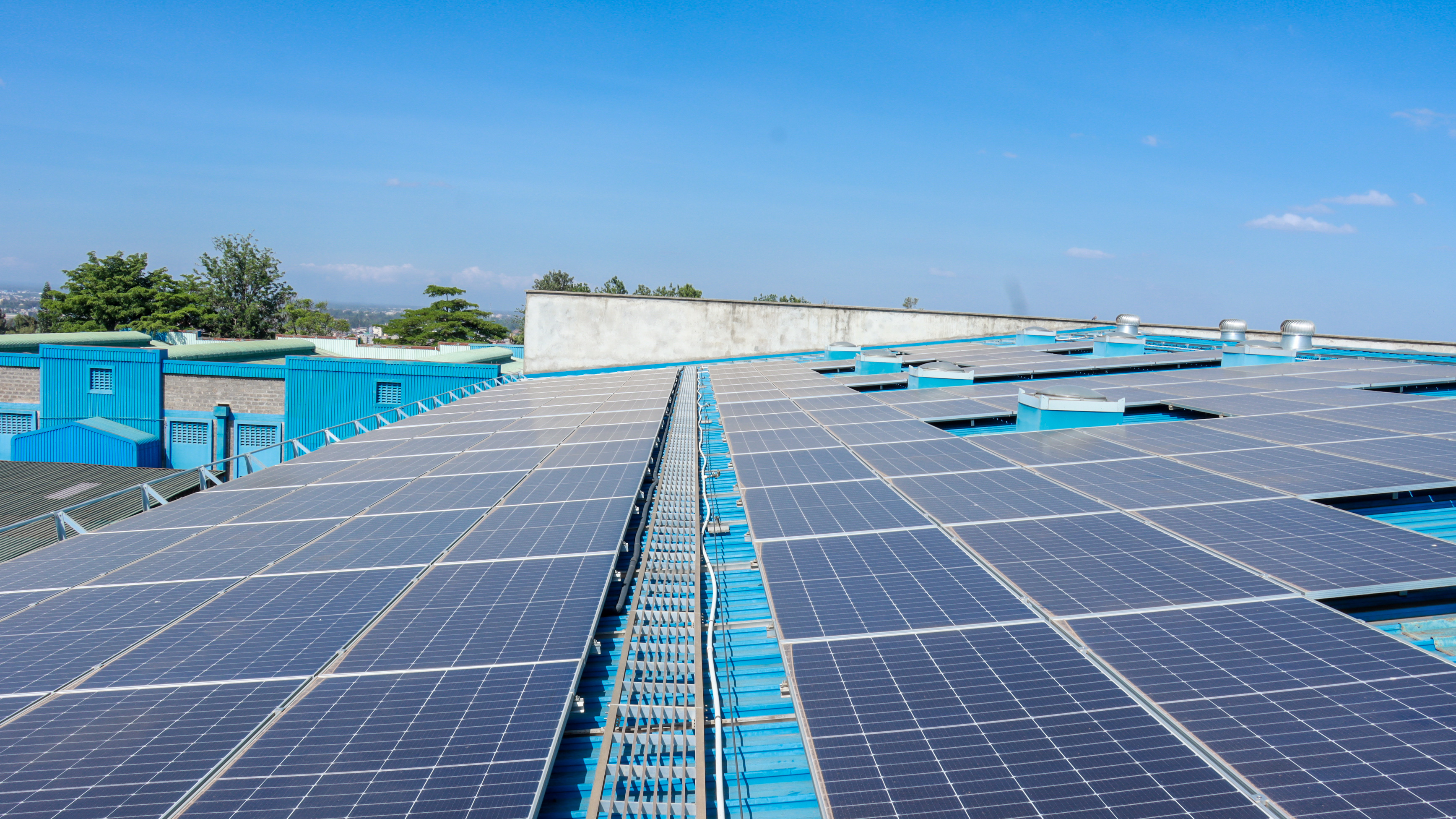
Solar panels at HACO factory roof
To reduce reliance on grid electricity and fossil fuels, HACO has installed solar photovoltaic (PV) systems across its facilities, including a 240 kWp system at the plastics factory and a 180 kWp system at the Personal and Home Care plant, which covers 60% of the plant’s energy needs. These installations collectively offset approximately 43% of the company’s GHG emissions, supplying up to 40% of total facility energy demand and displacing an estimated 23.6 metric tons of CO₂-equivalent (MtCO₂e) per month.

Sun Tunnels/Solar Tubes used as a Natural Lighting Alternative for the plastics factory
Between January and October 2025, HACO’s Scope 1 and 2 emissions amounted to 1,385 MtCO₂e, of which 518 MtCO₂e (37%) were avoided through renewable energy usage. HACO aims to achieve carbon neutrality for Scope 1 and 2 emissions by December 2026. Plans are also underway to install an additional 180 kWp grid-tied system to power the chemical factory, scheduled for implementation in 2025.

“The Chasing Zero Initiative reflects our belief that sustainable manufacturing is not just possible; it is essential. Already, we see measurable progress, from increased waste recovery to meaningful reductions in emissions, reinforcing the value of investing in clean and responsible production. By reducing waste, lowering our carbon footprint, and embracing renewable energy, we are demonstrating that economic growth and environmental stewardship can advance together. We invite other corporations to join us on this journey as we collectively work toward the SDGs and uphold the Ten Principles of the UN Global Compact,” remarked Mary-Ann Musangi, Managing Director, HACO.
Judy Njino, Executive Director, UN Global Compact Network Kenya, commends the operational evolution of HACO as a milestone for corporate business sustainability in East Africa and expresses optimism that others will follow suit.

"HACO’s Chasing Zero Initiative reflects the kind of bold and accountable leadership we need from the private sector today. By integrating circularity, clean energy and responsible manufacturing into core operations, they are demonstrating that environmental stewardship and commercial performance can reinforce each other. This level of ambition, backed by transparent action and measurable progress, is essential for accelerating sustainable industrial growth. We encourage more companies to embed responsible business conduct into their strategies and to show what is possible when long-term value creation is aligned with the needs of people and the planet,” she added.
The inclusion of company names and/or examples is intended strictly for learning purposes and does not constitute an endorsement of the individual companies by the UN Global Compact.