Africa is a youthful, resource rich, geographically vast, and politically diverse continent with expanding economies, robust private sectors, growing wealth, and improving governance and institutions.
Amidst all this potential, however, the continent continues to face challenges related to infrastructure, financial access, informality and global competition – all of which leads to economic inequality and poverty. The global pandemic and climate change have exacerbated these challenges.
The Opportunity
With the 2030 Agenda for Sustainable Development deadline fast approaching, the Climate Change Conference of Parties (COP 27) recently taking place in Africa, and the implementation of the African Union's Agenda 2063, now is an opportune moment to create a collective blueprint that will transform Africa into a global powerhouse of the future.
To fulfill this vision, businesses in Africa must embrace responsible business practices and become stewards of sustainability. As we unlock this enormous opportunity, Chief Executive Officers (CEOs) have a vital role to play.
Our Focus
The ABLC has two long-standing focuses: taking robust action on climate change and accelerating women's economic inclusion. To join the ABLC, our members agree to uphold certain commitments in these two areas. If you would like to join the ABLC, please reach out to ablc@unglobalcompact.org
The Africa Business Leaders Coalition (ABLC), a CEO-led coalition formed to amplify the collective voice of the African private sector, was established in May 2022 under the United Nations Global Compact. The ABLC has grown to 75 companies collectively representing USD 170+ billion in revenues and nearly one million employees, operating across 96% of African countries. Firmly rooted in the UN Global Compact Strategy 2026-2030 as a key initiative to catalyze collective action, ABLC members are committed to advancing sustainable growth, prosperity and development in Africa by bringing measurable impact to its most pressing issues.
The ABLC gathered the perspectives of African CEOs and Board Chairs on gender equality across the continent. These conversations lead to the African Business Leaders' Gender Statement, which includes several inward and outward activities to foster gender equality in addition to a bold call to action.
The ABLC Gender Statement builds on the findings of a survey by the UN Global Compact and Boston Consulting Group of men and women across five major African economies (Egypt, Kenya, Morocco, Nigeria and South Africa). The survey found there is a significant expectation-reality gap with many believing there was gender parity in spite of empirical evidence and men and women's own experiences in Africa showing otherwise. The survey outlined steps private sector companies must take to drive forward gender equality in business.
Following COP 27, the coalition deepened its focus on climate action through tracking its climate statement commitments and policy advocacy. These efforts led to the development of the ABLC's first policy blueprint, From Vision to Action: A Policy Blueprint for Channelling $130 Trillion Private Capital into Africa's Sustainable Business Future. In partnership with the Center of Global Energy Policy Energy Opportunity Lab at Columbia SIPA, the ABLC launched its first policy blueprint at COP 28.
On the heels of COP 30 in Belém, the ABLC launched its third voluntary Annual Impact Report, which showcases significant advances in climate finance, renewable energy, and resilience efforts, as well as gender equality strategy and representation, working models, safety, and women entrepreneurship. Surveyed ABLC Membership reported mobilizing 9.4 billion USD for climate action, increasing their renewable energy mix to 59% (more than double the 27% ambition set under the initial Climate Statement goals) and 50% of members have climate resilience plans. The ABLC also provided a baseline for gender equality work in its first consolidated measurement year; 84% of ABLC companies integrate gender-equality strategies into their core business, 37% measure gender-based pay discrepancies, and 65% implement anti-discrimination training. Members collectively directed USD 1.02 billion to women-led enterprises and entrepreneurship programs.
At COP 29 in Baku as part of the UN Global Compact's high-level Caring for Climate event, the ABLC launched its second annual Voluntary Climate Report which showcases significant advancements in climate finance, renewable energy, adaptation and resilience efforts, in addition to strategies for a just transition to a green economy. Surveyed ABLC Membership reported mobilizing 4.8 billion USD for climate action, increasing their renewable energy mix to 28% and 94% plan to or have completed climate risk assessments.
At COP 28 in Dubai, the ABLC also launched its Voluntary Climate Report that details the progress achieved by coalition members in alignment with the ABLC 2022 Climate Statement. It provides a transparent overview of the committed efforts and advancements made towards impactful climate action on the continent.
"Climate change presents a $3 trillion investment opportunity in Africa by 2030. But this potential will not be realized unless the private sector is involved. This coalition has a critical role to play in ensuring the voice of Africa's private sector is heard on the global stage to ensure the continent's growth is not only sustainable but also green."
- Sanda Ojiambo, Assistant Secretary-General and CEO, UN Global Compact
ABLC at Africa CEO Forum in Kigali, Rwanda, May 2026
ABLC members gathered in Kigali at the Africa CEO Forum for a closed-door roundtable on unlocking intra-African trade through CEO collective action. Led by Sanda Ojiambo, Assistant Secretary-General and CEO of the UN Global Compact, the event brought together over 30 African CEOs and global executives spanning sectors such as financial services, telecommunications, agribusiness and logistics.
ABLC at UNGA80 in New York, USA, September 2025
During UNGA Week in New York, ABLC took the spotlight at GABI's Unstoppable Africa, highlighting the central role of African business in global solutions. Programming included a high-level roundtable with the African Union Deputy Chairperson and Commission of Economic Development and Trade, Tourism, Industry and Minerals (ETTIM) focused on increasing intra-African trade, a mainstage panel on dealmaking, a CEO dinner shaping the coalition's direction, and a CSO Forum on sustainability solutions.
ABLC Gender Equality Webinar Series, virtual
ABLC's Gender Equality Series, delivered with the UN Global Compact Gender Equality team, UN Women, and other UN partners, is driving practical action toward SDG 5. Through focused sessions, the series unpacks the Africa Business Leaders' Gender Statement and equips members with tools to move shared gender-equality commitments from pledge to practice. To date, members have engaged in webinars on the employee lifecycle, gender-responsive procurement, and addressing violence against women and girls in the workplace.
ABLC at B20 in Johannesburg, South Africa, November 2025
At the first-ever B20 held on the African continent, ABLC amplified the voice of Africa's private sector through a dedicated side event with GCNSA at GIBS Business School. The session launched the SME Readiness Tool and explored how ABLC members can help strengthen intra-African trade. A panel featuring Phumzile Langeni highlighted the role of large corporates in championing SMEs, followed by an ABLC members' breakfast that focused on identifying concrete actions to expand regional trade.
ABLC at Africa CEO Forum in Abidjan, Cote d'Ivoire, May 2025
At the Africa CEO Forum, ABLC underscored the power of collective action, sharing its impact to date and engaging CEOs on how the Coalition can deepen its relevance in a shifting geopolitical landscape. ABLC hosted two dedicated events: a plenary panel highlighting progress on the Climate and Gender Statements and showcasing cross-border collaboration opportunities, and an executive working session with ASG Sanda Ojiambo where CEOs reaffirmed their commitments, identified partnerships and trade as priorities for the next phase, and emphasized the importance of amplifying ABLC's impact.
Recent Publications
ABLC 2025 Annual Impact Report
The ABLC's third voluntary Annual Impact Report showcases significant advances in climate finance, renewable energy, and resilience efforts, as well as gender equality strategy and representation, working models, safety, and women entrepreneurship across Africa.
Five Mindset Shifts to Unlock Intra-African Trade
This position paper outlines five critical mindset shifts needed to unlock Africa's intra-continental trade potential, drawing on insights from ABLC member CEOs and business leaders across the continent.
ABLC Perspectives
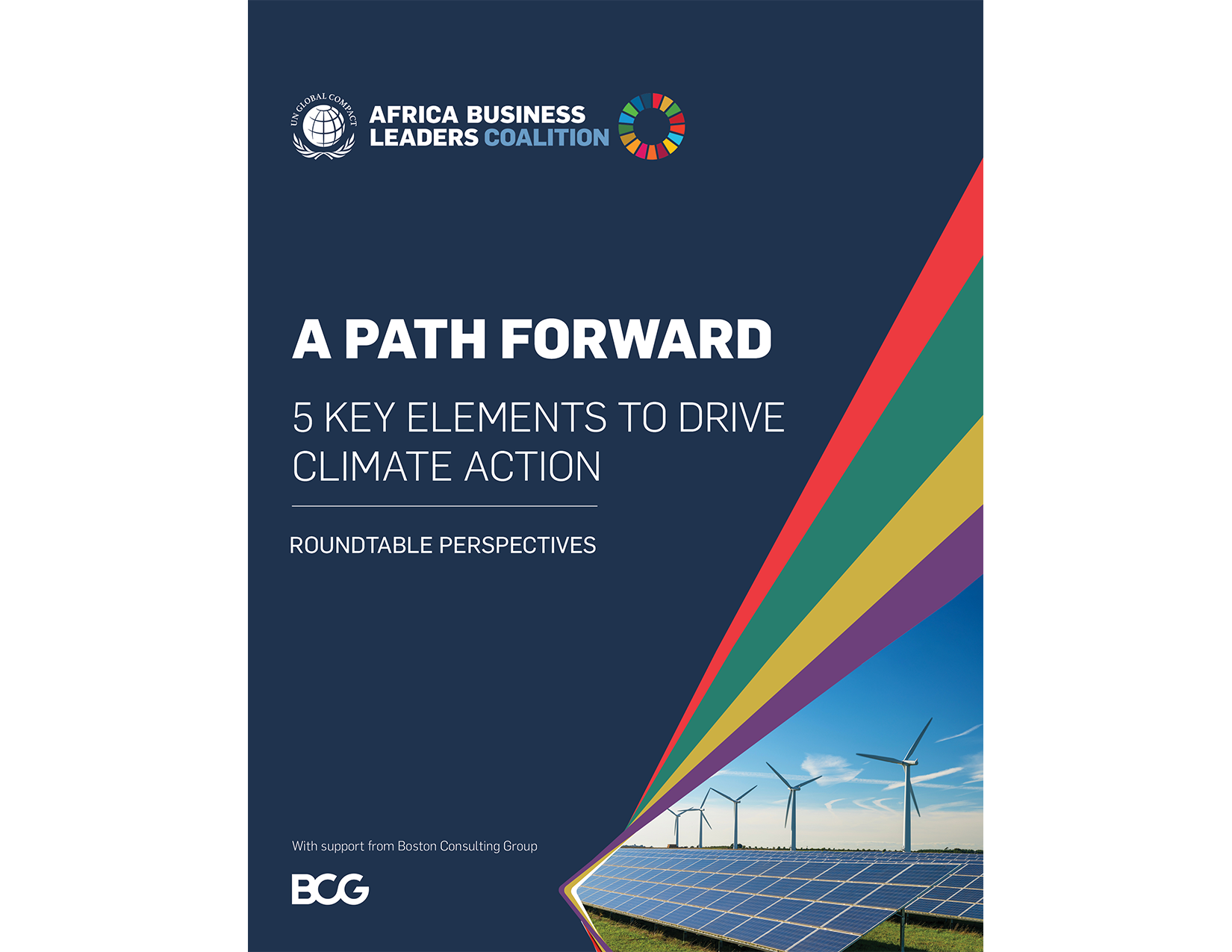
A Path Forward: 5 Key Elements to Drive Climate Action in Africa
This publication is a compilation of roundtable perspectives on the five most pressing climate issues in Africa. It includes insights from over 50 leading CEOs and executives.
Elevating African Business Leaders' Call for Global Collective Action
The private sector's voice can influence the global conversation around climate action. Learn how African businesses can ensure local voices – and realities – are centered in these discussions.
Delivering on the Promise of a Just Transition in Africa
The private sector plays a critical role in a just transition to net-zero. Learn how businesses can prioritize initiatives and restructure business models to support a just transition.
Shifting the Focus to Adaptation and Resilience in Africa
Learn how African businesses can meaningfully engage in adaptation and resilience planning that benefits both the company and the broader community.
Financing Climate Action in Africa
Gain insights into the barriers to climate funding access in Africa — and the multi-sectoral actions that can be taken to overcome them.
Making Ambitious Climate Mitigation Action a Reality in Africa
Learn key perspectives and gain CEO insights on making low-carbon development a reality in Africa.
UNGC-BCG Corporate Africa Advancing Gender Equality report
This publication synthesizes findings of a survey by the UN Global Compact and Boston Consulting Group of men and women across five major African economies revealing a significant expectation-reality gap. This report highlights steps private sector companies must take to drive forward gender equality in business.
ABLC Newsletter Vol. 1- May 2024
We are pleased to share the first edition of the ABLC newsletter, providing a summary of the latest developments, initiatives, and achievements of the ABLC across the continent. This edition contains a recap of the ABLC presence at the Africa CEO forum in Kigali, Rwanda on 16-17 May. There, we launched our landmark Gender Statement, shared our new publication in collaboration with BCG on women's economic inclusion, and held a multi-stakeholder discussion of climate financing.
Co-Chairs and Advisory Council
Phuthi Mahanyele-Dabengwa
Naspers Limited
South Africa CEO & Executive Director
ABLC Co-Chair
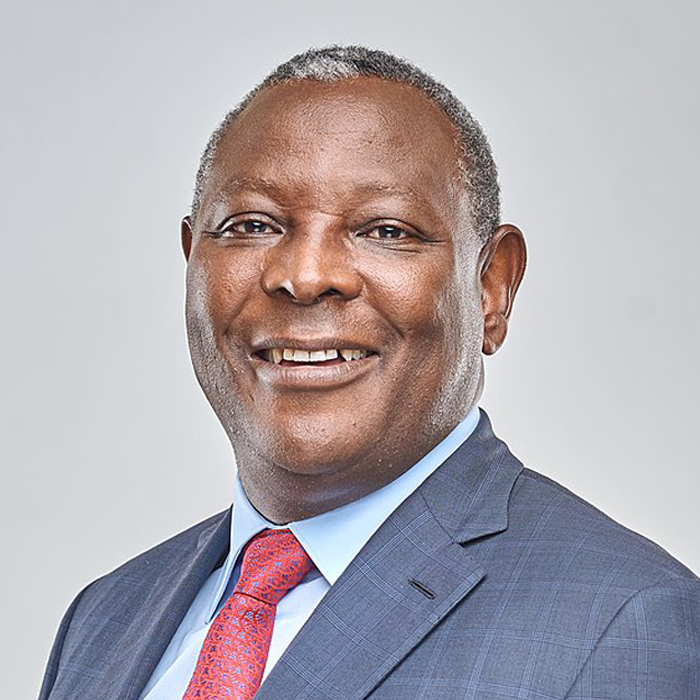
James Mwangi
Equity Group Holdings PLC
Group Managing Director & CEO
ABLC Co-Chair
Sunil Taldar Airtel Africa PLC CEO
Ayman Ismail AI Capital Founder, Chairman, and CEO
Hassanein Hiridjee AXIAN Co-CEO
Brahim Benjelloun-Touimi Bank of Africa Group Executive Managing Director
Hichem Elloumi COFICAB Chairman & CEO
Phumzile Langeni DP World Africa Deputy Chairman
Jeremy Awori Ecobank Group CEO
Karim Bernoussi INTELCIA CEO
Yasmine Mohamed Farid Khamis Oriental Weavers CEO & Chair





.jpg)
.jpg)