A Compass in a Changing World: Fifteen Years of the UN Guiding Principles
Read more

Business leaders today are navigating a world that would have been difficult to imagine fifteen years ago. Geopolitical fractures and rising conflict are redrawing supply chains.
Climate change is displacing communities and disrupting operations at unprecedented levels. Artificial intelligence is transforming industries faster than regulation can follow, and threatening to deepen existing inequalities. Civic space is shrinking. Seventy-three per cent of the world’s population now lives in countries where civic freedoms are restricted, often silencing the very voices companies rely on to make informed, responsible decisions.
CEOs are naming these pressures, ranking social and economic inequality alongside climate and geopolitical instability as key concerns. Despite growing awareness, business responses are uneven. Short-term competitive pressures risk crowding out the investment needed to tackle inequality and other systemic barriers to sustainable markets. This matters not only for the people directly affected, but for business itself: persistent inequality weakens purchasing power, erodes trust and undermines the social stability on which resilient markets depend.

This is where the UN Guiding Principles on Business and Human Rights (UNGPs) matter most. Not as a compliance framework. Not as a reputational shield. But as a compass for navigating a rapidly changing and volatile world. The UNGPs orient every business decision around one clear, consistent question: who might be harmed by what we do, and what are we going to do about it?
A framework born from necessity
Endorsed in June 2011, the Guiding Principles built directly on the founding commitments of the UN Global Compact. The UN Global Compact launched twenty-six years ago following then UN Secretary-General Kofi Annan’s call to give globalization a human face, to keep people, not just markets, at the centre of business decisions. That founding purpose is more urgent today. Where the Ten Principles of the UN Global Compact asked companies to respect human rights and core labour standards, the Guiding Principles showed them how to deliver on that ask. The two frameworks share the same intellectual DNA: The Ten Principles set the destination and the UNGPs mapped the route.
Fifteen years of real change
The progress since 2011 is genuine, and it deserves to be named clearly.
Across the network of 23,000 companies that are part of the UN Global Compact, more than 90 per cent of participants report having human rights policies in place. An analysis of major corporations globally shows a significant surge in human rights disclosures, supplier due diligence processes and board-level governance of human rights risks. Dozens of countries have adopted national action plans on business and human rights. Mandatory human rights due diligence legislation has advanced in Europe, with growing legislative momentum in Asia and Latin America, signaling an important shift from voluntary to mandatory.
Perhaps most significantly, the conversation has changed. Fifteen years ago, human rights were largely absent from boardrooms and investment committees. Today, they are increasingly present in ESG frameworks, supplier contracts, procurement decisions and the questions asked by institutional investors managing trillions of dollars in assets.

The Guiding Principles did not cause this shift alone, but they provided the authoritative framework around which it coalesced, fundamentally reframing due diligence from a focus on risks to business to the risks business poses to people. The growing demand to translate this framework into action is evident across the UN Global Compact.
Since its inception, our Business & Human Rights Accelerator has engaged more than 3,000 companies, helping businesses move from commitment to implementation. In 2027, for the first time, more than 50 Country Networks will run the Accelerator. This is a powerful indication of growing demand for practical human rights support.
The gaps are real and consequential
Honest assessment, however, requires highlighting what has not changed, or not changed fast enough.
Across more than 23,000 participants of the UN Global Compact, more than half of companies have yet to extend human rights due diligence meaningfully through their supply chains. Many still do not fully understand what is expected of them or where to begin. The gap between policy and practice remains too wide. Awareness has grown. Implementation has not kept pace.
Our recent insights report, drawn from participants in the Human Rights Think Lab, reveals that internal embedding and senior leadership support are crucial to driving real impact. The role and impact of CEOs and business leaders cannot be overstated here.

Importantly, in an increasingly unstable world, the gap between ambition and implementation can cost people and businesses. A case in point: as AI is deployed faster than the guardrails around it, public trust is falling even as adoption accelerates, which is a warning that unresolved risks to people do not stay contained to the margins of a business but can erode acceptance of the products built for them. In turn, where companies act on people’s salient concerns, the benefits are tangible: companies that have invested in paying living wages across their own operations and supply chains report stronger workforce retention, more resilient local economies, and more stable, productive supply relationships.
Why the compass matters more than ever
It would be easy, in a world of compounding crises, to treat human rights as one sustainability issue among many; important in principle, but deprioritized when balance sheet pressure mounts. That is a mistake, and not only for ethical reasons.
Human rights are not separate from the other challenges businesses face. They are the connective tissue that runs through all of them. Consider how extreme heat is affecting workers, how water scarcity is disrupting both communities and business operations, how AI-driven hiring systems can reinforce discrimination, or how efforts to diversify supply chains can expose workers to new risks of exploitation.

Climate change is a human rights issue. The communities most exposed to its impacts are those with the least power to adapt.
Artificial intelligence carries human rights implications at scale, whether it’s in hiring algorithms that discriminate, in surveillance tools that restrict freedoms, or in automated decisions that affect livelihoods without transparency or recourse. That’s why human rights due diligence in the age of AI is more important than ever.
Human rights due diligence is not a trade-off against business performance. It helps address the inequalities and harmful practices that undermine trust, livelihoods and economic stability. It supports more resilient businesses and sustainable markets in which the benefits of growth are more widely shared.
The companies navigating today’s turbulence most effectively are not the ones setting human rights aside under pressure. They are the ones using human rights as a compass and consistently asking who might be harmed, acting on what they find, and building the kind of trust with workers, communities, and investors that makes them genuinely resilient. That trust is the foundation that durable businesses are built on.
Business leaders also cannot afford to ignore a regulatory reality. With mandatory human rights due diligence requirements advancing, companies that have built genuine due diligence capacity underpinned by the Guiding Principles are better placed to meet these requirements and to shape how they evolve. Those that have not are exposed in ways that will only become more costly over time. The question for business is not whether to act, but whether to act now or later and at what cost?
What the next fifteen years require
The endorsement of the Guiding Principles marked “the end of the beginning,” as the late John Ruggie reflected. It was not the conclusion of the journey, but the start of the far more difficult work of turning principles into practice. Fifteen years on, experience has deepened our understanding of what effective implementation requires and where the greatest gaps remain.
What the next fifteen years require, above all, is a shift from commitment to consequence. From policies to measurable outcomes. From due diligence as a process to due diligence as a genuine practice of accountability to the people affected by business decisions.
At the UN Global Compact, we continue to work with companies across 160 countries to turn commitment into practice through our convenings, tools, guidance and Country Networks helping companies translate the Guiding Principles into local practice.
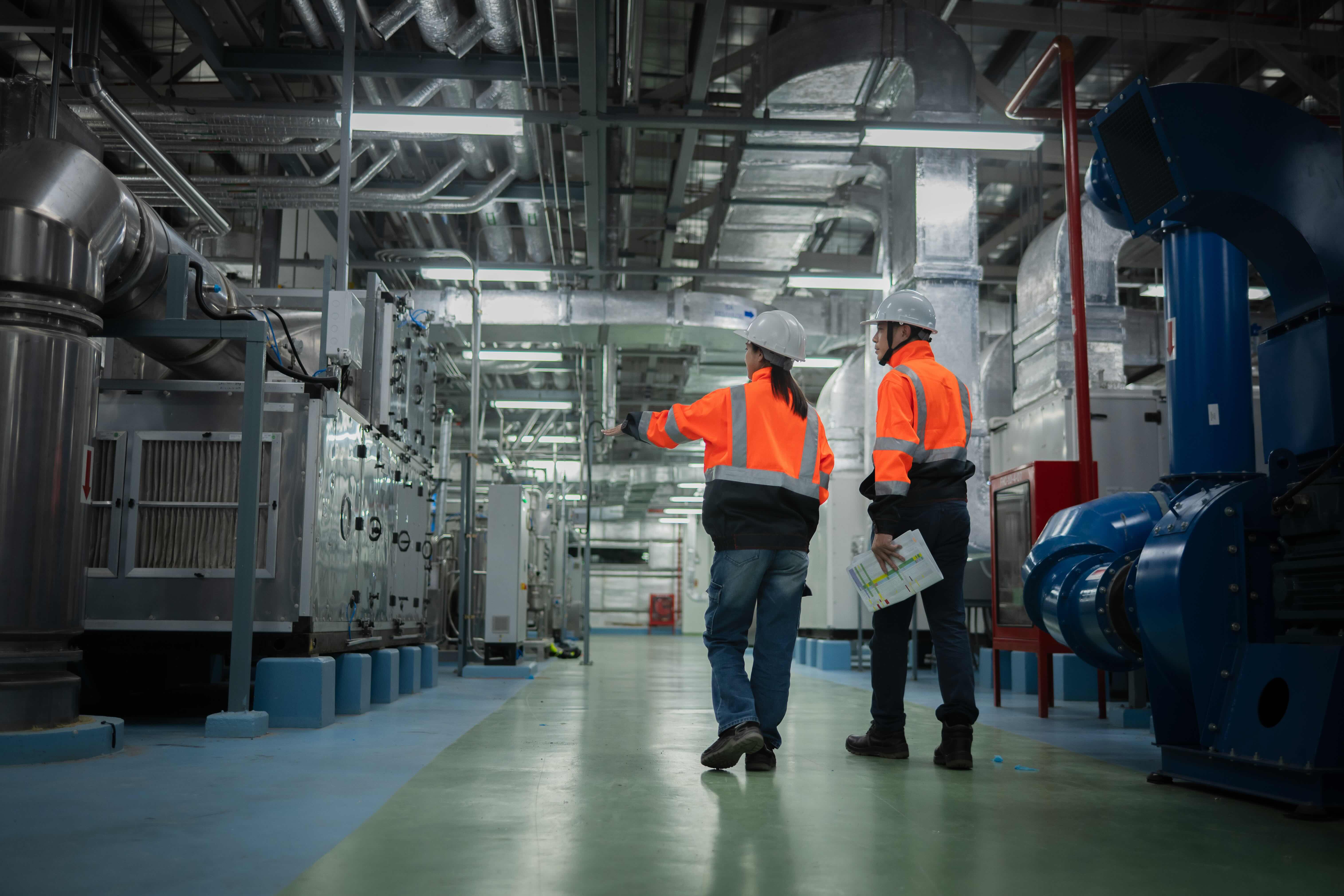
For companies beginning the journey, the first step is understanding where the most severe risks to people exist across operations, value chains and products. For companies further along, the challenge is moving beyond policies and disclosures toward evidence of impact and accountability.
Moving to outcomes
That shift begins with leadership. Business leaders need to ask harder questions of their own organizations: Where are people being harmed by our business model, products, purchasing practices or supply chains? Are we listening to the people most affected? When we identify serious risks, are we prepared to change the decisions or practices that create them, even when doing so carries an initial cost?
Human rights cannot be embedded through policies alone. They require leadership that makes responsibility part of how decisions are actually taken, incentives are set, and performance is judged.
Investors can help drive this shift by looking beyond policies and disclosures to evidence of implementation and impact. Governments must set clear expectations and provide a supportive regulatory environment, while civil society, journalists, and human rights defenders provide the scrutiny that keeps accountability real. Protecting civic space is therefore central to effective business and human rights governance.

Fifteen years on, the framework is established. The business case is increasingly clear. The support is available. The challenge now is not awareness, but measurable improvements in people’s lives. As businesses navigate a more fragmented, uncertain and unequal world, respect for human rights is increasingly becoming a marker of resilient leadership. The companies best positioned for the future will be those that use the Guiding Principles not as a compliance exercise, but as a practical guide for decision-making when the stakes are highest.