
How Casa Rica Cut Emissions by 30% and Diverted 1,370 Tons from Landfill
Start Reading

1. Company at a Glance
In this case study, we discover how Casa Rica, a Paraguayan food retail company, is accelerating its transition toward sustainability through a strategy rooted in carbon mitigation, circular innovation and employee engagement. By combining emissions tracking, waste transformation and cross-sector partnerships, the company has developed a replicable model for reducing environmental impact while strengthening consumer and employee participation. Casa Rica’s approach demonstrates how measurable results can be achieved through targeted, scalable actions.
Retail
Industry
1988
Founded
Paraguay
Headquarters
947
Number of Employees
2. The Challenge
Turning Impact into Opportunity
Casa Rica launched its sustainability journey in 2019, driven by the understanding that all business activities generate impact—and that companies must become part of the solution. Through an internal diagnosis, the company identified key opportunities to shift toward a more sustainable model aligned with the UN 2030 Agenda.
This led to the creation of the 2030 Sustainable Development Strategy, structured around three pillars: environmental sustainability, social responsibility and employee well- being. The decision to implement this practice was rooted in a strong internal conviction: to move away from a linear, wasteful model and instead build a purpose-driven business capable of generating measurable, positive change.
3. The Action
Circularity and Carbon Reduction Through Integrated Innovation
MEASURING AND REDUCING CARBON EMISSIONS THROUGH A MITIGATION STRATEGY
Casa Rica committed to achieving carbon neutrality by 2030 and built a dedicated emissions mitigation strategy around that goal. Since 2020, the company has measured its carbon footprint annually using a specialized platform to ensure methodological consistency and data traceability, following internationally recognized standards including the GHG Protocol, ISO 14064-1 and IPCC guidance. The company also reported its emissions inventory and mitigation actions through the United Nations Climate Neutral Now initiative for three consecutive years (2021–2023), adding an external reporting framework to its decarbonization efforts.
Using 2020 as its baseline year, Casa Rica reported a 25% reduction in emissions in its latest measurement year, with average mitigation of 30% across the five-year period. These results were driven by initiatives focused on resource optimization, waste valorization and operational improvements.
LAUNCHING CIRCULAR PRODUCTS THROUGH STRATEGIC PARTNERSHIPS
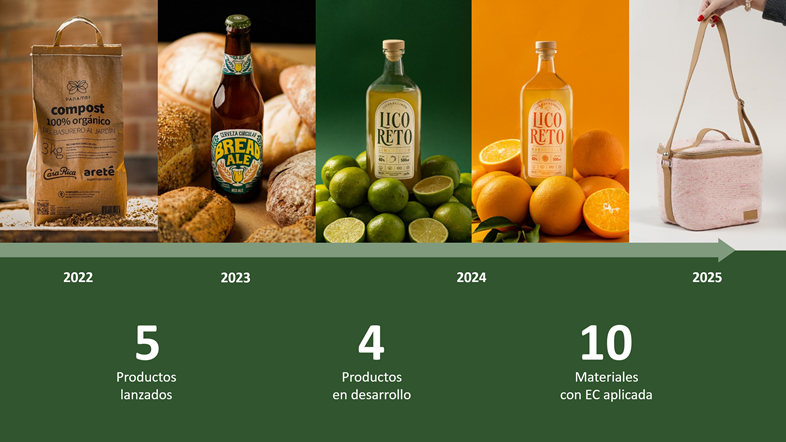
Casa Rica developed five circular products through partnerships that transformed operational waste streams into market-ready goods. Rather than stopping at waste separation, the company focused on reintroducing discarded materials into new value chains, helping turn underused resources into commercially viable products.
These partnerships resulted in:
- Compost from organic waste, developed with Panambi Recicla
- Bread Ale, a beer made with surplus bread, developed with Palo Santo Brewing
- Licoreto, citrus liqueurs in two varieties—Limoncello and Narancello—made from fruit peels, developed with Destilería Reta
While the main objective was to reduce waste sent to landfill and increase resource recovery, Casa Rica also considered the economic viability of each initiative. Products were designed to compete within their categories and support longer-term continuity, showing that circularity could generate both environmental value and market-facing opportunities.
BUILDING INTERNAL CAPACITY THROUGH ENVIRONMENTAL EDUCATION
The company implemented a structured Environmental Education Program to train staff on waste separation, resource efficiency and sustainability principles. This helped foster a company-wide culture of environmental responsibility.
CIRCULAR PACKAGING AND RESOURCE EFFICIENCY INITIATIVES
Casa Rica redesigned six types of packaging in bakery and confectionery lines, eliminating over 2.4 tons of single-use plastic annually. This was part of its broader environmental strategy, which includes making packaging more sustainable.
NAVIGATING REGULATORY GAPS WITH REGIONAL BENCHMARKS
With no national regulation for circular food products in Paraguay, Casa Rica relied on Brazilian legal frameworks to demonstrate compliance and enable safe commercialization of its innovations (Bread Ale)—showing that regulatory uncertainty can be overcome with smart benchmarking.
COMMUNICATING IMPACT TO CUSTOMERS
Each circular product includes on-label environmental metrics (e.g., CO2 emissions avoided, water saved), empowering customers to make informed, responsible purchases and reinforcing Casa Rica’s brand as a sustainability leader.
4. Overcoming Barriers
Internal behavioral change
Casa Rica encountered initial resistance in achieving proper waste separation at the source. Many employees were unaware of their individual role in driving sustainability. The company addressed this by implementing targeted training and internal education campaigns to build awareness and promote long-term cultural change.
Regulatory uncertainty for circular food products
Paraguay lacked clear regulatory pathways for food products made with circular inputs, creating delays and legal ambiguity. Casa Rica overcame this by referencing Brazilian food safety regulations to demonstrate compliance and secure approval for market launch.
Consumer perception and price sensitivity
Market research showed that most consumers prioritized price over sustainability when choosing products. To address this, Casa Rica ensured that all circular products were competitively priced and featured clear environmental impact labeling to influence more conscious consumption.
5. Impacts & Results
Emissions reduction
Casa Rica achieved an average 30% annual emissions reduction over five years, with a 25% reduction in 2024 alone, as part of its carbon neutrality strategy.
Waste diverted from landfill
Through circular product development and resource efficiency initiatives, the company prevented over 1,370 tons of waste from reaching landfill over five years. This includes organic waste, food surplus, cooking oil, cardboard and more.
Customer engagement and loyalty
Circular products featuring environmental impact metrics contributed to strong consumer uptake and brand positioning. Casa Rica also engaged strategic partners, customers and key stakeholders annually through events like the Circular Week, bike rides, and Green Points for recycling materials in each of the stores.
Circular product innovation
Casa Rica launched five circular products through strategic partnerships using waste-derived inputs, with four additional products in development. These were the first products of their kind in Paraguay. Beyond demonstrating product innovation, some of these new offerings also achieved strong commercial performance. Licoreto became the top-selling product in its category in less than six months after launch, while Bread Ale ranked fourth among 25 craft beer brands sold in Casa Rica stores.
Recognition and leadership
The company received various national and international recognitions. The carbon footprint measures and results have been validated by the Climate Neutral Now Initiative (CNN) in three consecutive years 2021, 2022 and 2023. Bread Ale and Licoreto has been part also of the Global Big Food Redesign challenge led by the Ellen MacArthur Foundation.
At the local level, Casa Rica was recognized as one of the Low Carbon companies as part of a programme led by the Ministry of Environment and Sustainable Development, and also as a Circular company in another programme led by Fundacion Moises Bertoni.
6. Key Lessons Learned
Build internal ownership through education
Training employees to understand the purpose and impact of sustainability initiatives was key to changing behaviors and ensuring commitment at all levels of the company.
Innovation can move ahead of regulation
In the absence of national standards for circular food products, Casa Rica successfully moved forward by referencing regional regulations— proving that innovation does not need to wait for policy to catch up.
Price and communication drive consumer uptake
Casa Rica ensured that its circular products were competitively priced and labeled with clear environmental impact data, helping consumers make informed and responsible choices.
Partnerships enable scalable solutions
All circular products were developed through strategic alliances with specialized partners. These collaborations were essential for material transformation, product development and market readiness.
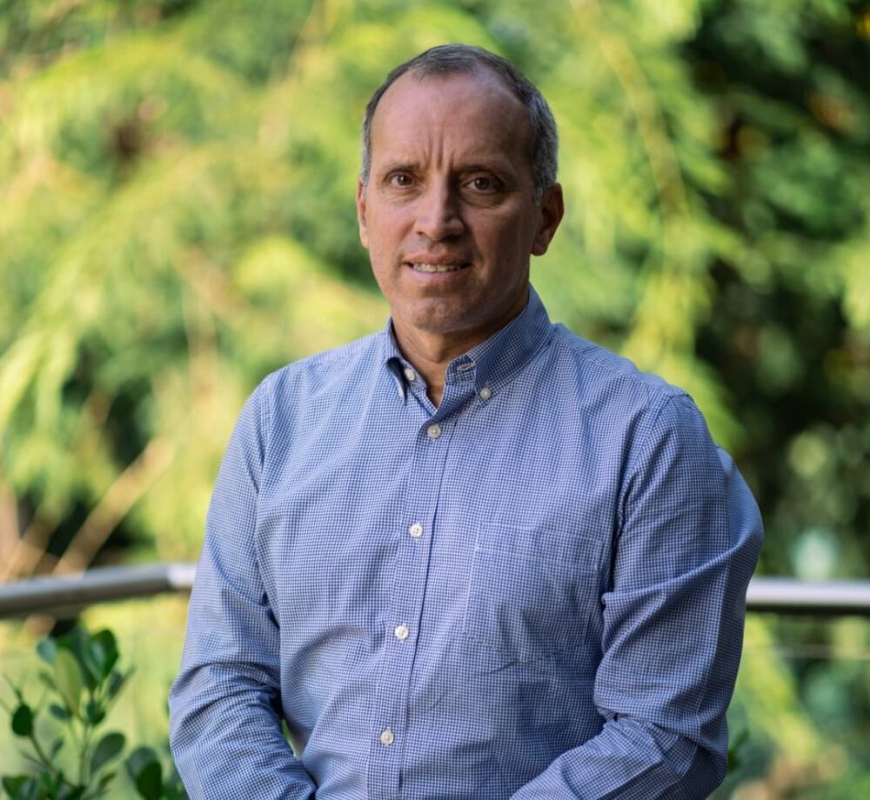
"We conceive sustainability as a process of continuous improvement and we want to be part of the solutions, innovating with tangible actions, sustainable products and measured impact.”
Marcelo Sabanes, Sustainable Development Manager
7. Company Commitment
Casa Rica has been a committed participant in several UN Global Compact initiatives since 2020, such as the Business and Human Rights Accelerator Programme.
8. Recommended Resources
Recommended UN Global Compact Resources

Download Case Study
Disclaimer: This case example is intended strictly for learning purposes and does not constitute an endorsement of the individual companies by the UN Global Compact.