
D&L: Displacing 612 million liters of fossil diesel and cutting 917,474 MT CO2e through cocodiesel
Start Reading

1. Company at a Glance
In this case study, we explore how D&L Industries—through its wholly owned subsidiary Chemrez Technologies, Inc. (CTI)—pioneered the Philippines’ cocobiodiesel industry to strengthen national energy security, support local coconut farmers, and reduce dependence on imported fossil fuels while cutting greenhouse-gas emissions.
Diversified
Industry
1963
Founded
Philippines
Headquarters
1,500+
Number of Employees
2. The Challenge
The Philippines faced acute energy-security pressures, with heavy reliance on imported fossil fuels weakening economic resilience and environmental sustainability. At the same time, the coconut industry—an economic backbone supporting over 25 million Filipinos— remained exposed to commodity price volatility and limited value creation at the farm level.
Drawing on its core expertise in specialty chemicals and its commitment to local sourcing and sustainability, D&L identified a strategic inflection point: coconuts could become a scalable domestic energy resource through cocobiodiesel—coconut methyl ester (CME), a fuel made from coconut oil that is blended into conventional diesel. The risks of inaction were clear. A collapse in copra prices, such as the one experienced in 2000 after international buyers shifted to alternative long-term supply sources, could undermine farmer livelihoods and incentivize the cutting of productive coconut trees for lumber. At the same time, continued reliance on pure diesel carried significant environmental and economic costs, including annual pollution costs estimated at ₱2.32 trillion and exposure to global fuel price shocks, such as a ₱6.47 per liter diesel MOPS fluctuation within nine months.
By pioneering cocobiodiesel, D&L aimed to reduce dependence on fuel imports while building a scalable, zero-import supply chain aligned with global decarbonization trends and creating shared value for rural communities.
3. The Action
DEVELOP AND VALIDATE COCOBIODIESEL TECHNOLOGY (2002–2006)
Through CTI, D&L funded extensive technical research on biodiesel fuel features via local laboratories. This R&D built the technical foundation for the Philippine cocobiodiesel industry and reduced performance/quality uncertainty before scaling.
BUILD FIRST INDUSTRIAL-SCALE CONTINUOUS PRODUCTION (2006)
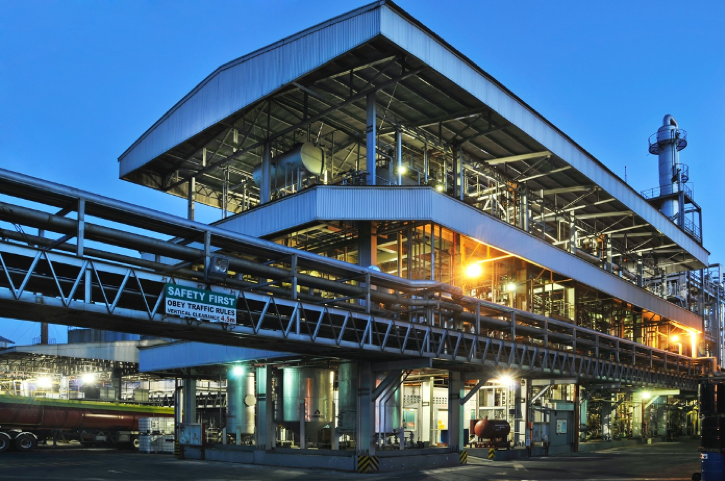
CTI built Asia’s first continuous coconut biodiesel plant (90M liters per year capacity). The continuous processing design was selected to maximize efficiency, increase yield capacity, speed up reaction times and reduce waste generation and production costs versus batch approaches.
SHAPE THE ENABLING POLICY ENVIRONMENT (RA 9367 BIOFUELS ACT)
CTI actively supported the drafting of the Biofuels Act (Republic Act No. 9367) with government stakeholders to establish the regulatory framework for biodiesel blending mandates. This collaboration anchored market creation and scale-up through mandated demand.
ACCELERATE MARKET ADOPTION THROUGH AWARENESS AND PROOF-OF-PERFORMANCE
To overcome initial resistance driven by limited awareness of biodiesel benefits, CTI ran extensive educational campaigns and demonstration projects. These efforts targeted key audiences in sequence: first, fleet operators such as bus and truck companies, where high diesel use made fuel-economy and lubricity benefits easier to demonstrate in real operating conditions; then engine original equipment manufacturers, whose warranty positions were critical to broader market acceptance; and finally government stakeholders involved in the drafting and implementation of the Biofuels Act. Together, these actions helped build confidence in CME blends by showing practical benefits and reducing perceived risk for users and decision-makers.
STABILIZE SUPPLY QUALITY VIA TIGHT PROCESS CONTROL AND CONTINUOUS OPTIMIZATION
To manage variations in locally sourced coconut oil, CTI used tight process control at its Chemrez biodiesel facility. Because coconut oil from smallholder supply can vary in free fatty acid content, moisture and impurities, operators monitored live conversion data and adjusted parameters such as catalyst loading, reaction temperature and methanol-to-oil ratio during production. This allowed CTI to absorb feedstock variation while keeping the final product aligned with the Philippine National Standard for Coconut Methyl Ester, protecting consistency and operational performance at scale.
LINK THE INITIATIVE TO COMMUNITY SUPPORT IN COCONUT-FARMING AREAS
D&L complemented the industrial rollout with education support and rural infrastructure development (including solar-powered water systems) in coconut-farming areas. These initiatives reinforced shared value alongside the coconut-based supply chain.
4. Overcoming Barriers
Initial market resistance due to limited awareness of biodiesel benefits required extensive educational campaigns and demonstration projects.
Feedstock quality variation from local suppliers required precise operational parameter control and continuous optimization efforts
Long regulatory delays in increasing biodiesel blend mandates (over a decade between B2 and B3* implementation) hindered industry growth potential.
*B2, B3 and B5 blending levels: “B2” means diesel fuel blended with 2% coconut biodiesel (CME) and 98% conventional diesel. “B3” means a 3% CME blend (97% conventional diesel), and “B5” means a 5% CME blend (95% conventional diesel). Higher blends replace more fossil diesel with biodiesel.
5. Impacts & Results
917,474 MT CO2e cumulative GHG reduction from CME sales (2019–2025).
612 million liters of petroleum diesel displaced since commercial operation (2007).
78% reduction in carbon emissions compared to petroleum diesel (UPLB life-cycle assessment, gross basis).
457.7522 ktoe of fossil energy avoided since plant operation (as of end-2024).
99.41% product yield and 91.69% production efficiency (2024).
90% of raw materials sourced locally.
35-year projected plant lifespan, with 18 years successfully completed (as of end-2024).
Direct employment for over 100 workers (production, logistics, and quality assurance as of end-2024).
Educational support for 15,402 students across multiple Lao Foundation programs, including 68 children of coconut farmers in the community-based scholarship program (2025).
Infrastructure development including solar-powered water systems in rural communities.
10% mileage improvement for vehicles using B5 blend vs B2.
Market leadership as the largest biodiesel manufacturer in the Philippines.
Transition to a higher blend delivering 372–620% ROI.
Soot reduction: 80% (B3) and 95.6% (B5 target), translating to P1.86–P2.2 trillion potential savings in annual air pollution and health costs*.
Estimated annual nationwide fuel efficiency savings of P23.3–P38.9 billion (B5 target).
Net annual gain of P17–32.6 billion for consumers, as the P0.70/ liter premium for B3 is “vastly offset.”
CME engine performance benefits cited: High lubricity (reduced engine wear) and High solvency (declogging fuel injectors).
6. Key Lessons Learned
Strong government-industry collaboration was essential for establishing supportive regulatory frameworks and successful policy implementation.
Backward integration with coconut farmers ensured sustainable supply chains while providing fair compensation to agricultural communities.
Pioneer advantage is crucial in emerging industries - early investment in R&D and infrastructure establishes market leadership and technical expertise.
Long-term commitment is necessary as environmental and social benefits accumulate over time, requiring sustained investment despite initial challenges.

"We have been instrumental in supporting the country’s implementation of the Biofuels Law, which incorporates biodiesel into the national fuel mix — helping reduce emissions, support local agriculture and promote energy security.”
Alvin Lao, President & CEO
7. Company Commitment
D&L has been a committed participant of UN Global Compact since 2023.

8. Recommended Resources
Recommended UN Global Compact Resources


Download Case Study
Disclaimer: This case example is intended strictly for learning purposes and does not constitute an endorsement of the individual companies by the UN Global Compact.