
Diverting 31,700 Tonnes of Waste: A Systematic Model for Food Waste Reduction
Start Reading

1. Company at a Glance
In this case study we explore how CP AXTRA, a leading wholesale and retail business, is transforming food waste management through an end-to- end Zero Waste approach that spans prevention, redistribution and resource recovery. Through innovation, cross- sector partnerships and operational change, the company shows how food waste reduction can create measurable value for business, communities and the environment.
Wholesale and Retail Trade
Industry
Operates Makro (wholesale) and Lotus’s (retail)
Key Brands
Bangkok, Thailand
Headquarters
70,000
Number of Employees
2. The Challenge
For CP AXTRA, food waste was both a business risk and a strategic opportunity. As one of Thailand’s leading wholesale and retail companies, the business operates at a critical point between producers and consumers, where inefficiencies in packaging, forecasting, logistics and in-store handling can lead to product loss, higher waste management costs and unnecessary greenhouse gas emissions. At the same time, growing national attention to Thailand’s food waste challenge highlighted an opportunity for the company to use its scale to reduce waste across the value chain, recover more value from surplus food and strengthen its contribution to communities and the circular economy.
To formalize this transformation, CP AXTRA established the ‘AXTRA Zero Waste’ initiative. This program is a cornerstone of the company’s 2030 Sustainability Roadmap, which sets a formal commitment to achieve Zero Food Waste to Landfill by 2030.
3. The Action
Building an End-to-End Food Waste Reduction Model
The “AXTRA Zero Waste: Less Waste, More Value” initiative was implemented through a series of distinct operational shifts:
TECHNICAL REDESIGN OF PRODUCT SHELF-LIFE
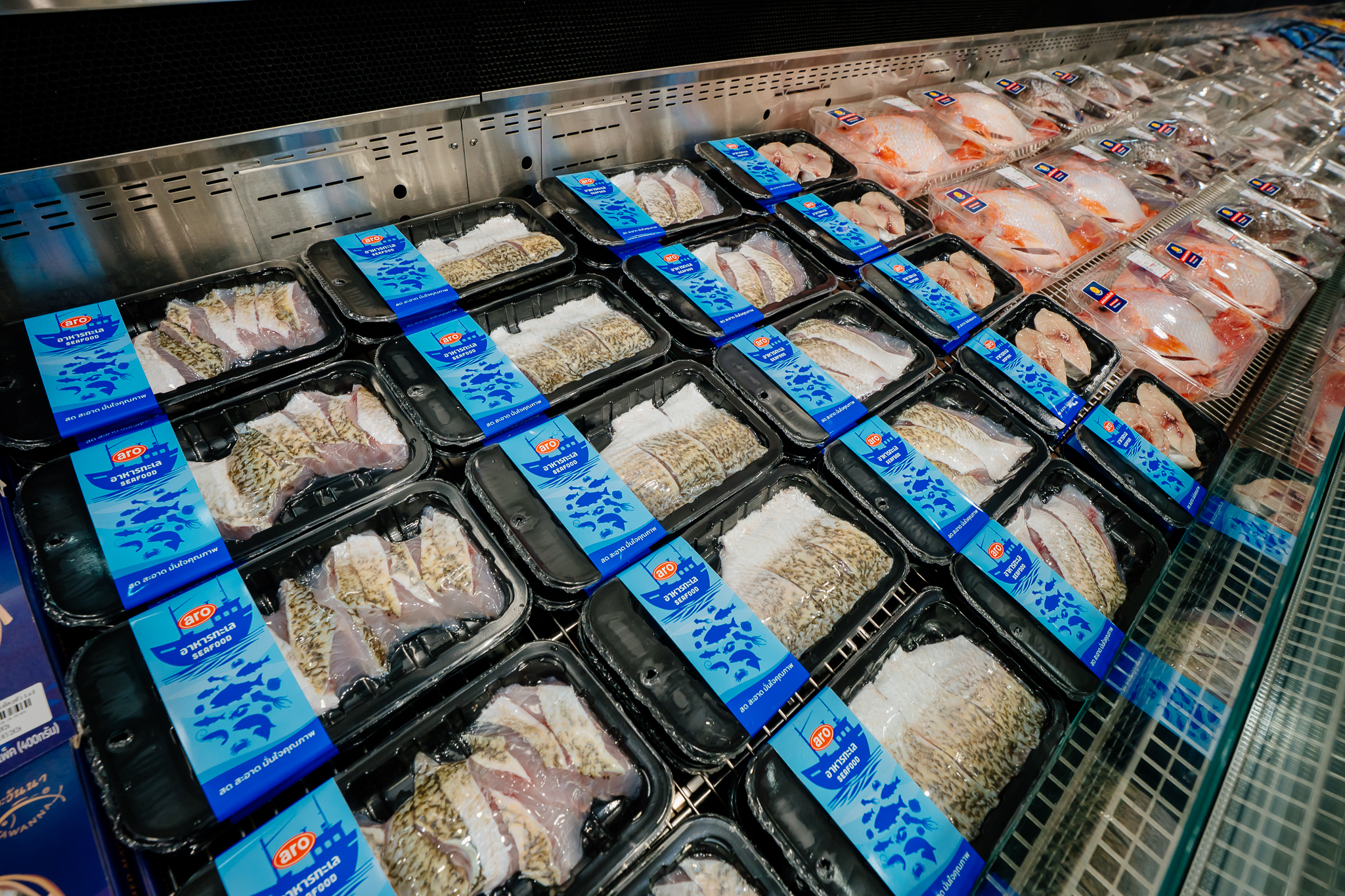
To prevent waste before it enters the retail system, CP AXTRA collaborated with producers to implement advanced packaging technologies. This included the use of breathable bags for fresh produce, which extended shelf life from 3 days to a range of 7 to 14 days. Additionally, the adoption of vacuum-sealed “skin-pack” technology for meat products extended saleability from 3 days to up to 21 days. To further preserve quality during handling and display, the company introduced box-based sales formats for fruits, reducing physical losses.
LOGISTICS AND COLD-CHAIN OPTIMIZATION
The company upgraded its transportation standards and employed specialized methods to ensure product integrity remains intact from the farm to the store, for example through the adoption of water-loop cooling systems and improvements in cooling system efficiency. These logistical improvements were tailored to the specific quality requirements of different food categories, significantly reducing damage and deterioration during the distribution phase.
AI-ASSISTED DEMAND FORECASTING
CP AXTRA integrated digital intelligence to address overstocking, a primary driver of retail waste. By deploying an AI-assisted demand forecasting system, the company improved ordering accuracy across its wholesale and retail branches. This real-time data alignment ensures that procurement volumes match actual consumer demand, preventing the creation of surplus at the start of the retail cycle.
DYNAMIC COMMERCIAL INTERVENTIONS
Internal store processes were optimized to accelerate the turnover of products nearing their expiration date while remaining safe for consumption. This strategy centers on the “Yellow Label” system, where eligible items are identified, marked with discounted pricing and re-introduced to the sales floor. In 2025, a total of 86,141.35 tonnes of products were successfully processed through this markdown system. By prioritizing the sale of these marked items, the Group ensures that food reaches customers at more affordable prices, effectively utilizing dynamic pricing as a key tool for food accessibility and waste prevention.
SYSTEMATIC WASTE SEGREGATION AT THE SOURCE
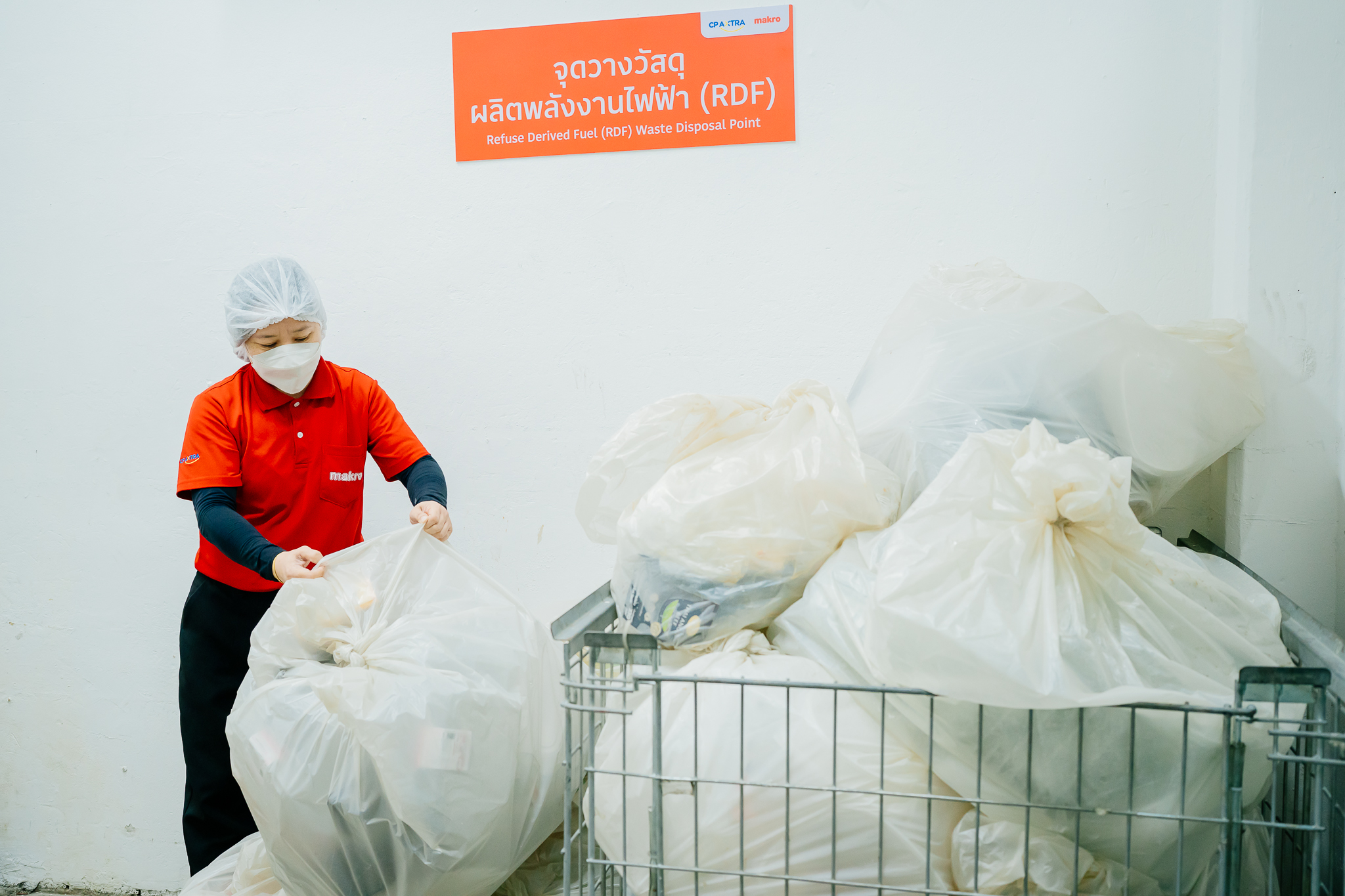
A rigorous sorting protocol was established at the branch level to prevent cross-contamination and preserve the value of different waste streams. Staff are trained to systematically separate materials—including edible surplus, animal-suitable surplus and organic waste—ensuring each is routed to its highest-value recovery channel before it loses value.
PROFESSIONALIZED FOOD REDISTRIBUTION
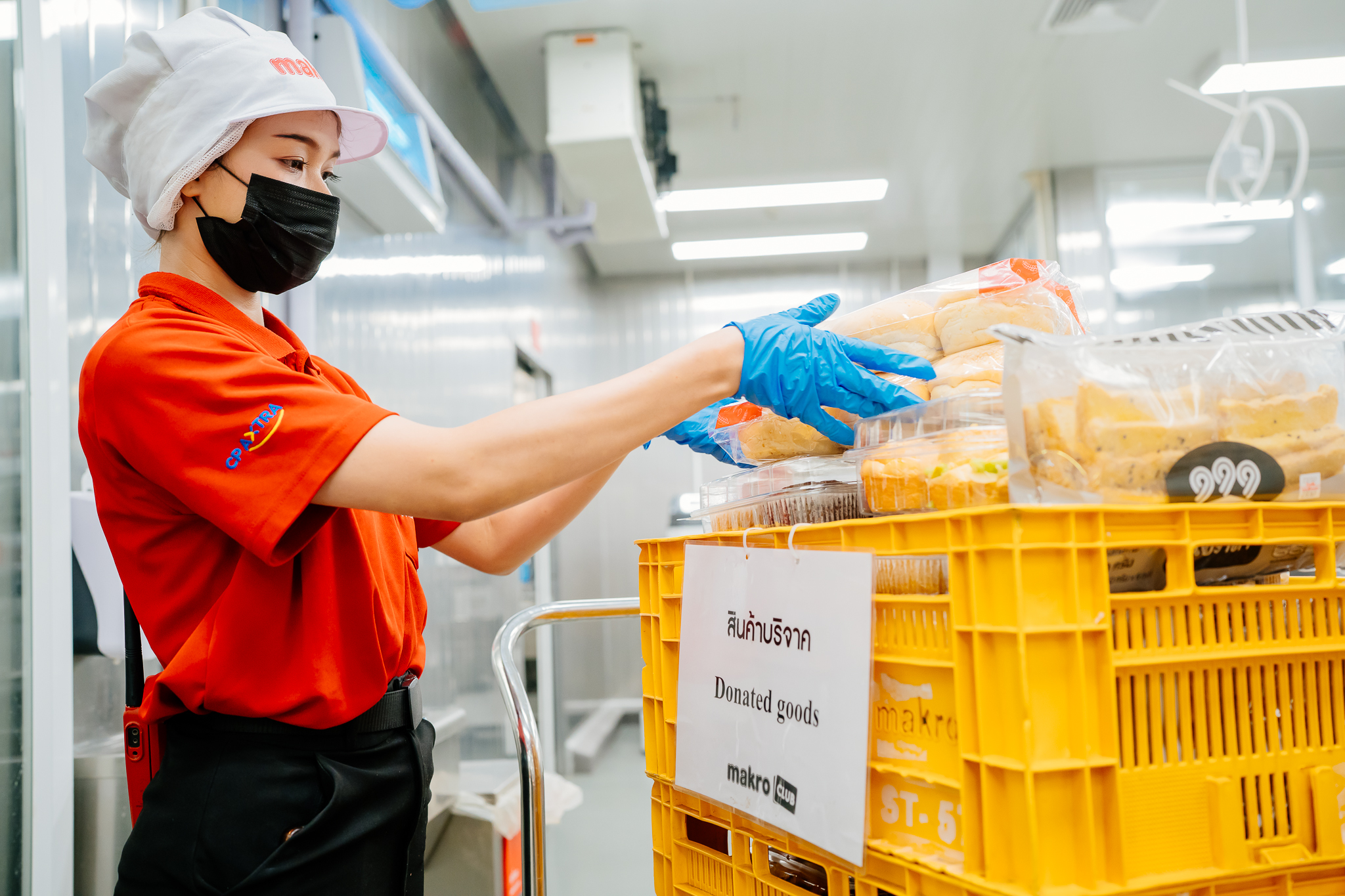
For food surplus that remains safe and suitable for human consumption, the company established formal logistics chains for donation. Through structured partnerships like the “BKK Food Bank Project” with the Bangkok Metropolitan Administration (BMA) and organizations like Scholars of Sustenance (SOS), CP AXTRA has redistributed over 4 million meals to vulnerable populations.
CIRCULAR TRANSFORMATION AND “WASTE TO WEALTH”
Waste no longer fit for human consumption is converted into new economic assets under the “From Waste to Wealth” concept. Safe surplus is redirected to 27 wildlife conservation centres nationwide as animal feed. Additionally, lower-grade waste is converted into high-protein insect feed through Black Soldier Fly (BSF) farming in collaboration with Khon Kaen University and BEDO, helping local farmers reduce feed costs by up to 50%.
PERFORMANCE GOVERNANCE AND AUDIT
To ensure long-term accountability, CP AXTRA embedded the initiative into its corporate governance structure. This involves conducting regular waste audits and including specific waste reduction metrics in the performance evaluations of employees and management. Results are reported directly to senior sustainability leadership, driving a culture of continuous improvement across the organization.
LOOKING AHEAD
CP AXTRA is committed to evolving its Zero Waste model from a retail-specific initiative into a broader value-chain standard. The company’s future strategy focuses on:
Value Chain Transformation:
As a strategic intermediary, CP AXTRA will work with suppliers to scale waste-reduction innovations piloted in its stores across new product categories.
Expansion of Circular Retail Models:
The company plans to scale its “Zero Waste Store” concept, integrating more in-store refill stations for household liquids and fabric softeners to reduce single-use plastic consumption.
4. Overcoming Barriers
Driving Organization-Wide Buy-In
The primary internal challenge involved aligning diverse stakeholders and employees across hundreds of Makro and Lotus’s branches with new sustainability protocols. To overcome this, leadership implemented structured training programs and established clear operational standards. Crucially, waste metrics were integrated directly into performance evaluations, ensuring that waste reduction became a core responsibility rather than an optional initiative.
Bridging the Investment Gap
Deploying advanced technologies like AI-assisted demand forecasting and innovative packaging (such as breathable bags and skin-pack technology) required substantial upfront investment. The company overcame financial skepticism by building a rigorous business case that linked waste prevention to efficiency gains, lower disposal costs, and improved inventory accuracy. By utilizing pilot programs to validate results before a national rollout, CP AXTRA proved that prevention is more cost-effective than downstream waste management.
Managing Post-Retail Leakage
A major external barrier was managing food surplus that was no longer marketable but still held value. CP AXTRA addressed this by forming strategic cross-sector partnerships with government agencies and academic institutions.
5. Impacts & Results
Environmental Performance
Progress toward zero waste to landfill: By 2025, CP AXTRA had reduced total waste sent to landfill by approximately 52% compared with 2022 levels, moving toward its 2030 zero waste to landfill ambition. The company calculates waste to landfill as total waste generated minus the portions redistributed for human consumption, redirected as animal feed or converted through Black Soldier Fly farming. The data is reported under GRI 306 and externally assured by LRQA.
Landfill diversion: increased from 111,273.63 tonnes in 2024 to 137,996.35 tonnes in 2025 (+24.0%).
Carbon mitigation: increased from 103,475.29 tonnes of CO2e avoided in 2024 to 173,628.85 tonnes in 2025 (+67.8%), through improved waste management and prevention strategies.
Waste recovery: increased from 5,620.36 tonnes of food waste reduced in 2024 to 18,774.39 tonnes in 2025 (+234.0%), through systematic distribution, conversion and reuse.
Material recycling: increased from 39,931.31 tonnes of non-food waste recycled in 2024 to 49,666.72 tonnes in 2025 (+24.4%).
Social and Community Impact
Food Security: Provided more than 4 million meals to people in need through surplus food redistribution in partnership with the BKK Food Bank.
Wildlife Support: Supplied over 2 million kg of surplus food to support animal care across 27 wildlife conservation centers nationwide.
Stakeholder Recognition: Received the Best Sustaining Partner Award 2025 from Scholars of Sustenance (SOS) for long- term excellence in food redistribution.
Economic and Operational Value
Cost Efficiency: Participating farmers reported reducing animal feed costs by up to 50% by using protein-rich Black Soldier Fly (BSF) larvae derived from food waste.
Value Creation: Transformed previously discarded organic matter into valuable resources like organic fertilizer and high-protein insect feed under the “From Waste to Wealth” concept.
Business Resilience: Validated that waste prevention is more cost-effective than downstream management, leading to improved inventory accuracy and lower disposal costs.
6. Key Lessons Learned
Integration of Sustainability and Profitability
Systematic waste management integrated across the entire value chain demonstrates that sustainability and profitability are mutually reinforcing by generating new economic value from previously discarded materials.
Strategic Multi-Sector Partnerships
Collaboration with diverse stakeholders, including government agencies (BMA, BEDO), academic institutions (Khon Kaen University), and civil society (SOS), is essential to impact beyond company boundaries and successfully turn waste into value across the supply chain.
Operational Accountability through Metrics
Aligning Zero Waste goals with measurable performance indicators across all business units and including these metrics in performance evaluations ensures high-level accountability and drives continuous improvement.

"A key takeaway is that systematic waste management integrated across the value chain — from upstream prevention to downstream circular reuse — can generate measurable environmental and societal benefits while creating new economic value from what was previously discarded.”
Ms. Siriporn Dechsingha, Chief Corporate Sustainability and Communication Officer
7. Company Commitment
CP Group has been a committed participant in several UN Global Compact initiatives since 2003:
Participant in the Climate Ambition Accelerator
Participant in the Target Gender Equality Accelerator
8. Recommended Resources
Recommended UN Global Compact Resources



Download Case Study
Disclaimer: This case example is intended strictly for learning purposes and does not constitute an endorsement of the individual companies by the UN Global Compact.