
Canouan Group restored its island tourism operations within three months while strengthening long-term climate resilience
Start Reading

1. Company at a Glance
This case study shows how Canouan Group transformed its response to Hurricane Beryl into a long-term resilience model for small-island tourism, maintaining salaries and bonuses for more than 600 employees while reducing resource dependence and generating measurable operational savings.
Hospitality
Industry
Canouan Island, Saint Vincent and the Grenadines
Headquarters
600+
Number of Employees
2. The Challenge
Building long-term resilience after Hurricane Beryl
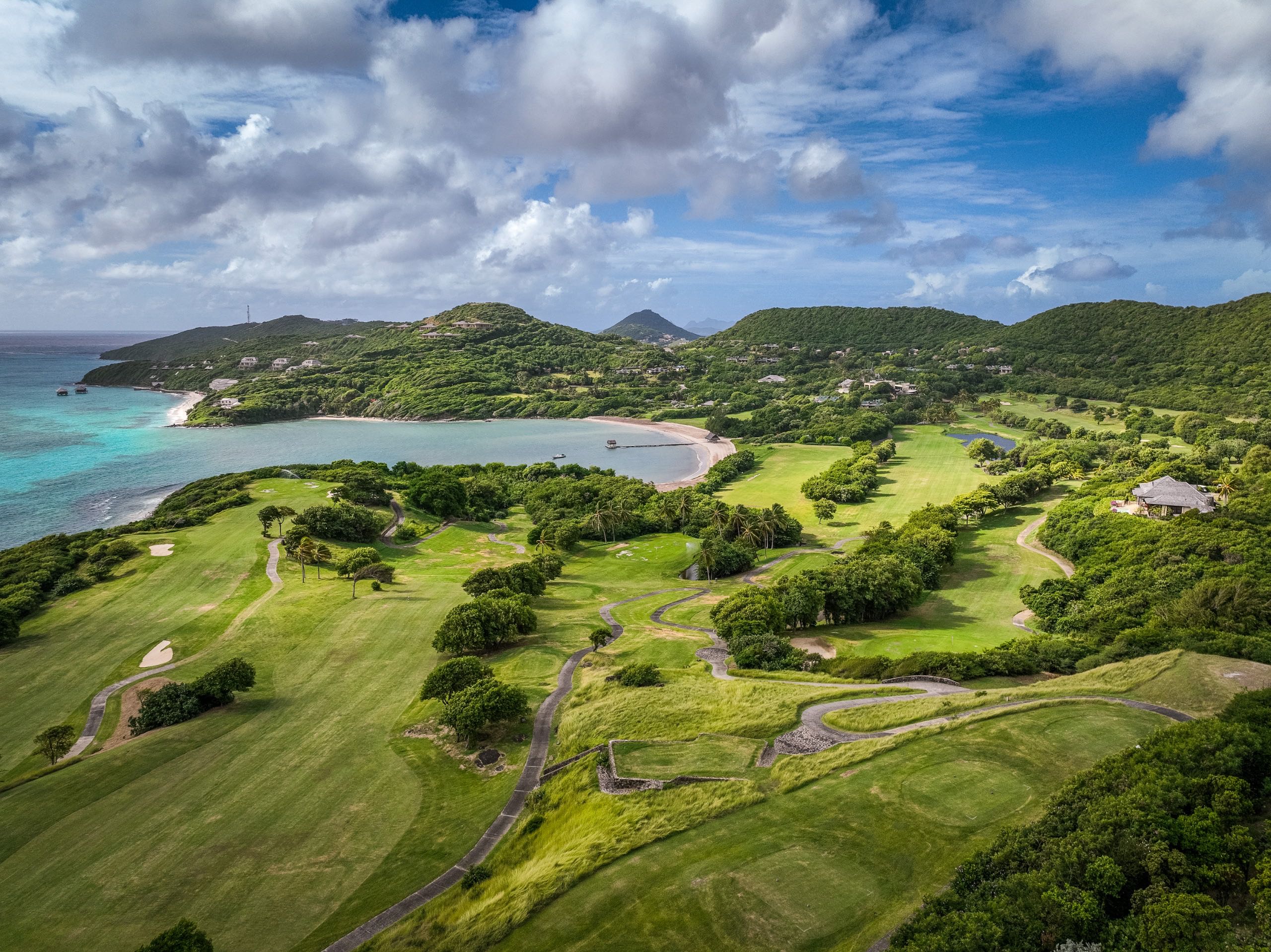
Canouan Group comprises three of the four major hospitality businesses on Canouan Island, a small-island economy where tourism depends on a closely connected system of employees, transport links, utilities, supply chains and natural assets. Disruption to any one of these elements can affect the Group’s ability to operate.
Hurricane Beryl struck the Grenadines on 1 July 2024, damaging homes, hospitality infrastructure and essential services. Employees faced displacement and the loss of personal belongings at the same time that the company’s properties were closed. For Canouan Group, restoring physical assets alone would not be sufficient: reopening depended on employees being able to remain on the island, rebuild their lives and return to work.
The hurricane also exposed longer-term vulnerabilities. Island operations relied heavily on imported goods and limited transport links and concentrated supply routes, while stronger storms, coral degradation, coastal pressures and waste-management constraints threatened the environmental assets on which the destination’s tourism offer depended.
The company also had limited environmental baseline data, no in-house water bottling plant and limited recycling arrangements. The business therefore needed to address two connected objectives: recover operations quickly after the hurricane and reduce its exposure to future disruption by embedding resilience into its workforce, infrastructure, resource use and natural asset protection.
3. The Action
Building resilience across people, operations and natural assets
Following Hurricane Beryl, Canouan Group structured its response around workforce recovery, operational continuity, physical resilience and the protection of the natural assets on which island tourism depends. The Sustainability Department led the longer- term programme, working with the Human Resources and Operations teams to integrate resilience into recovery decisions and day-to-day management.
STABILIZING THE WORKFORCE AND RESTORING OPERATIONS
Within 24 hours of Hurricane Beryl, Canouan Group activated its emergency response procedures. The immediate priority was to enable employees to recover while the company repaired its properties and prepared to resume operations.
The Human Resources and Operations teams coordinated several forms of support. The company continued paying salaries and bonuses during the closure, provided financial assistance to employees who had lost homes or personal belongings, and repaired and upgraded staff accommodation. It also helped provide water to affected households, while the local clinic team supported employees requiring medical assistance.
At the same time, operational teams repaired hotels, villas, utilities and supporting infrastructure. By addressing employee recovery and physical reconstruction in parallel, the company was able to mobilize the workforce required to reopen its properties.
CREATING A RECURRING FINANCING AND RESILIENCE SYSTEM
Once immediate operations had been stabilized, Canouan Group began converting the emergency response into a longer-term resilience model.
The company established the Canouan Resilience Fund, allocating 10 per cent of the revenue generated from guest stays to disaster preparedness and recovery. Linking the fund to hotel revenue created a recurring financing mechanism rather than relying solely on emergency allocations after a disaster.
The company also strengthened its physical and operational systems to reduce exposure to stronger storms, sea-level rise and service disruptions. Measures included upgrading hotels, villas and utilities; introducing backup utility systems; integrating renewable energy and water-recycling solutions; and incorporating insurance and disaster-risk planning into investment decisions.
Procurement and warehousing were progressively centralized to secure supply routes and improve access to essential materials during periods of disruption. These actions were designed to reduce the dependence of island operations on individual transport links, suppliers and utility systems.
INTRODUCING CIRCULAR SYSTEMS INTO HOTEL OPERATIONS
In 2024, Mandarin Oriental, Canouan began implementing the Circularity Lab as part of the wider resilience strategy. Its resource-management components included an in-house water bottling plant and a waste-management facility. In 2025, the property developed the procedures and internal practices needed to integrate these systems into daily operations.
For water management, the property installed an in-house bottling system, introduced refillable water points and incorporated rainwater-management measures. The model aimed to reduce dependence on imported bottled water while also limiting packaging waste.
For waste management, different material streams are separated at source and connected to specific reuse or recycling routes:
- suitable food waste is transferred to local goat farmers for use as animal feed;
- PET bottles, aluminium cans, HDPE containers, glass bottles and coffee capsules are separated at source and transferred to recycling partners.
- specialized arrangements were established for electronic and hazardous waste.
The property also introduced operational measures intended to prevent waste before it was generated. These included responsible procurement, refillable guest amenities, reduced paper use, linen and towel reuse programmes and the progressive elimination of single-use PET products. The Winnow food-waste monitoring system was introduced in kitchens to help teams identify where food was being discarded and adjust preparation and purchasing practices accordingly.
In December 2025, the Circularity Lab was expanded to SOHO Beach House Canouan, making it the only property in the entire SOHO House Group to feature a dedicated Sustainability Attendant on its payroll.
PROTECTING NATURAL ASSETS THROUGH SPECIALIST PARTNERSHIPS
Canouan Group worked with conservation organizations that could provide the technical expertise required to protect the natural assets on which island tourism depends. Richmond Vale Academy supported coral reef restoration activities, while the Saint Vincent and the Grenadines Conservation Fund collaborated on sea turtle protection programmes.
The Group also developed a tortoise sanctuary and release programme and invested in reef and mangrove protection as part of its approach to biodiversity conservation and climate resilience.
ESTABLISHING MEASUREMENT AND ACCOUNTABILITY SYSTEMS
By implementing the Greenview Portal—a sustainability data-management platform tailored for the hospitality sector—Canouan Group consolidated operational data on energy, water, waste, and greenhouse gas emissions across its properties.
The platform gave operational and sustainability teams a common system for tracking performance and building environmental baselines. This supported a shift from managing individual initiatives separately towards monitoring water, waste, energy and emissions through a more structured sustainability-management process.
Canouan Group complemented internal measurement with voluntary sustainability reporting and external hospitality sustainability assessments. Leadership supported these processes, while employees contributed operational data and implemented the corresponding procedures within kitchens, housekeeping, procurement, engineering and guest services.
To ensure long-term engagement and transparency, Canouan Group integrated sustainability training into the onboarding process for new hires, established cross-departmental Sustainability Committees, and began sharing monthly progress reports with all stakeholders.
4. Overcoming Barriers
Maintaining investment during a period of interrupted operations
The company faced the cost of repairing its properties while continuing to support employees during the closure. This increased the immediate financial burden of the recovery but helped employees rebuild and remain available for the reopening. The company then established the revenue-linked Resilience Fund to move from an emergency response towards a recurring financing model.
Building reliable data from a limited baseline
Canouan Group initially lacked consistent data on energy, water, waste and greenhouse gas emissions, making it difficult to establish baselines, compare performance and identify where operational changes were producing results.
To address this gap, the company adopted the Greenview Portal as a common system for tracking environmental performance. The data enabled the company to monitor progress across key indicators and establish a more structured approach to sustainability management.
Embedding sustainability into daily operations
A key barrier was shifting the perception of sustainability from an add-on to a core driver of operations. Moving from isolated environmental actions to daily practice required coordinated changes across procurement, kitchens, housekeeping, guest amenities and waste separation, while teams were still restoring normal operations after Hurricane Beryl.
Canouan Group introduced the changes progressively through practical measures that enabled employees and managers to incorporate the new procedures into routine workflows rather than treating sustainability as a separate activity.
5. Impacts & Results
Business Continuity and Workforce Recovery
Canouan Group reopened its properties within three months of Hurricane Beryl.
During the closure, the company maintained USD 6 million in salaries and bonuses for more than 600 employees.
More than 100 employees whose homes were affected received USD 700,000 in financial assistance for repairs and personal losses. The company also invested USD 600,000 in staff housing repairs and upgrades.
Water Efficiency and Operational Savings
In 2025, Mandarin Oriental, Canouan recorded 85,541 litres through its in-house bottling and water stewardship programme. The programme generated USD 136,489 in operational savings, primarily by reducing bottled-water imports.
Waste Diversion and Circularity
In 2025, Mandarin Oriental, Canouan redirected 5,108 kg of food waste to local goat farmers for use as animal feed.
The property also collected for recycling:
- 5,426 glass bottles
- 329 kg of PET bottles and aluminium cans
- 212 kg of HDPE containers
- 150 kg of coffee capsules
Biodiversity Protection
Mandarin Oriental, Canouan carried out seven tortoise-release activities, releasing 14 red-legged tortoises in 2025.
The company also launched coral reef restoration and sea turtle protection programmes in collaboration with conservation partners.
Employee and Community Engagement
Employees contributed 3,180 volunteer hours in 2025 through activities including community clean-ups, recycling initiatives and community clinics.
6. Key Lessons Learned
Employee recovery should be part of the business continuity plan
Hotels cannot reopen only by repairing buildings. In an island economy, employees may be affected by the same disaster as the business and may be unable to return to work without income, housing and essential services. Companies should define in advance how they will support their workforce during an extended closure.
Establish a recurring source of resilience finance
Emergency allocations can support an immediate response, but preparedness requires funding between disasters. Linking a defined share of operating revenue to resilience can provide
a more predictable source of financing for preparedness and recovery than relying solely on extraordinary allocations after an event.
Build data systems before scaling operational changes
Environmental baselines should be established before new systems are expanded. Consistent data on water, energy, waste and emissions enables companies to identify priorities, compare performance over time and demonstrate whether operational changes are producing results.
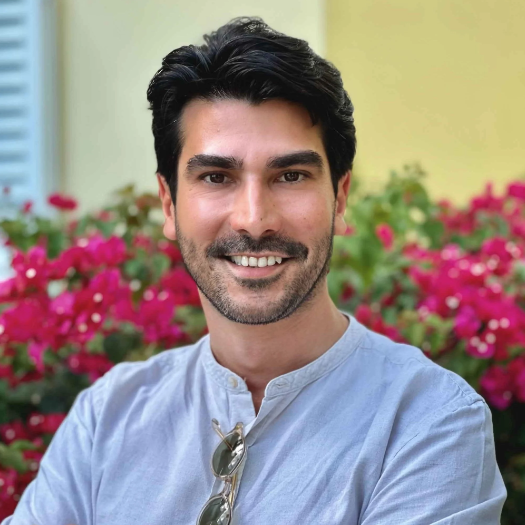
"Tourism is not an isolated activity; it exists within a delicate web of interdependence. Natural resources, human capital, infrastructure and transport all depend on one another’s health. This recognition has made sustainability not a marketing tool, but a core operational principle.”
Batu Erem, Chief Executive Officer, Canouan Group
7. Company Commitment
Canouan Group has been a committed participant in several UN Global Compact initiatives since 2025
8. Recommended Resources
Recommended UN Global Compact Resources


Download Case Study
Disclaimer: This case example is intended strictly for learning purposes and does not constitute an endorsement of the individual companies by the UN Global Compact.