
Alliance Bank: Helping Over 1,000 SMEs Move From ESG Awareness to Climate Action
Start Reading

1. Company at a Glance
In this case, we discover how Alliance Bank Malaysia helped turn low ESG awareness among SMEs into practical climate action through its 3As strategy: Advocacy, Advisory, and Answers. By combining research, partnerships, digital tools, and tailored financing, the Bank has supported SMEs in assessing their climate maturity, building transition plans, and accessing sustainable finance at scale.
Banking and Financial Services
Industry
1958
Founded
Kuala Lumpur, Malaysia
Headquarters
4,000
Number of Employees
2. The Challenge
Catalysing ESG awareness and adoption among SMEs
As sustainability expectations grew across Malaysia’s business environment, Alliance Bank identified both a risk and an opportunity within its SME portfolio. Many SMEs, despite playing a central role in the economy, had low ESG awareness, limited technical capacity, and little clarity on how to turn sustainability requirements into practical business action. This challenge extended beyond the Bank’s existing SME customers to the wider SME ecosystem, including suppliers to larger Malaysian corporates facing rising sustainability expectations across their value chains. For the Bank, the challenge was not only to close a capability gap, but to help SMEs become more resilient, finance-ready, and better aligned with evolving market expectations, while strengthening the long-term sustainability and competitiveness of its own portfolio.
3. The Action
A structured 3A strategy - Advocacy, Advisory, Answers
Alliance Bank structured its sustainability response around the 3As — Advocacy, Advice and Answers — and operationalised this approach through its Sustainability Impact Programme, a holistic proposition launched in 2023 that combines value-added sustainability solutions with preferential financing.
The programme was designed to support both the Bank’s SME customers and the wider SME ecosystem in Malaysia, including SMEs reached through corporate supply chains and regional partnerships. SMEs could register online to join the programme at any time.
ADVOCACY: RAISING AWARENESS AND UNDERSTANDING
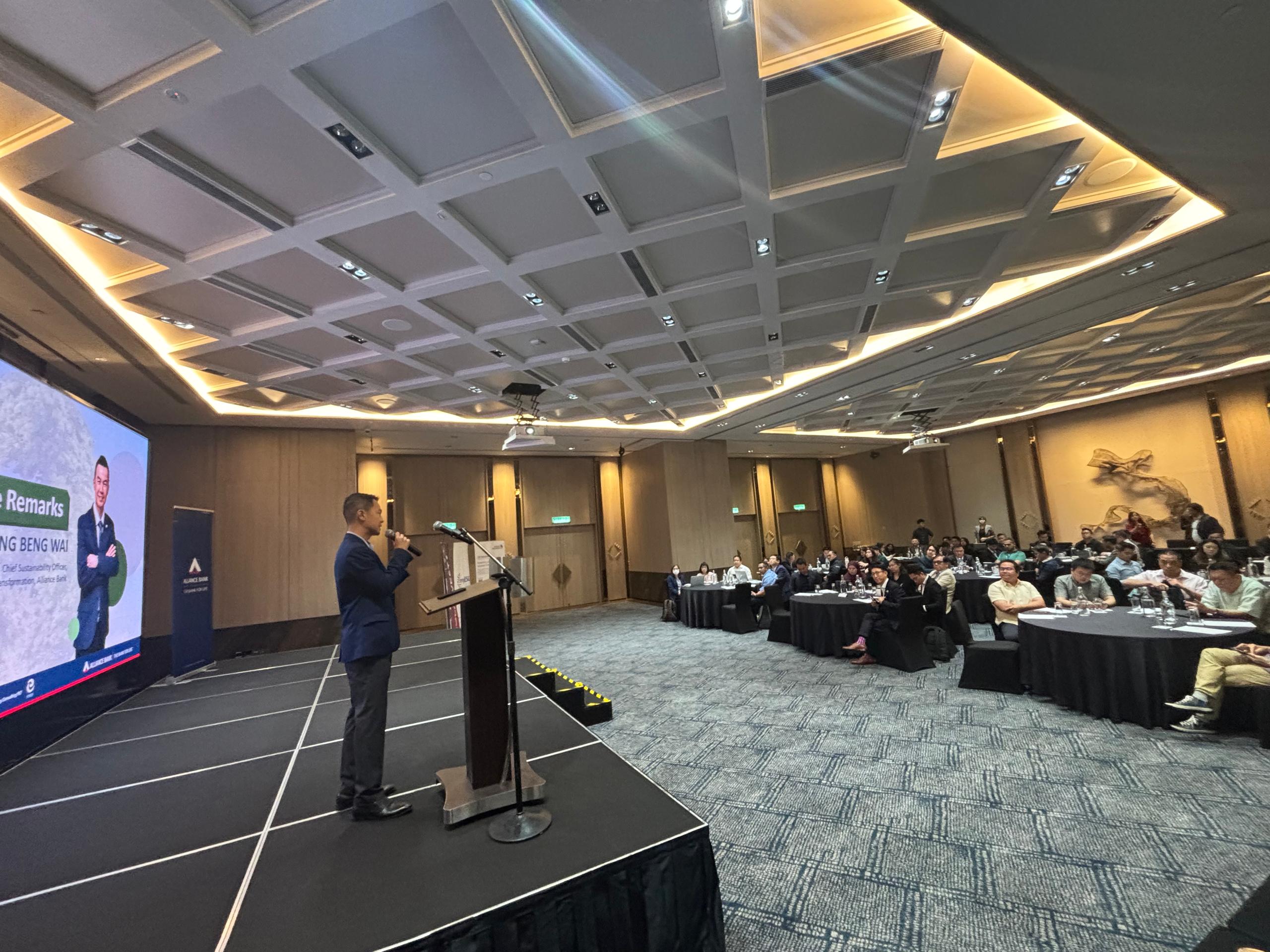
Alliance Bank led efforts to elevate ESG awareness among Malaysian SMEs through its flagship ESG 1.0 and ESG 2.0 reports which highlight key sustainability challenges and opportunities for SMEs. Monash University Malaysia served as the Knowledge Partner for ESG 2.0 and the Sarawak ESG Report, with the latter marking an important step in catalyzing awareness through region-specific ESG insights for East Malaysian SMEs.
In parallel, state investment promotion and regional development agencies such as Invest Sarawak, Invest Melaka, and the Northern Corridor Implementation Authority (NCIA), to roll out targeted ESG workshops, broadening access to sustainability knowledge and support for SMEs nationwide.
Alliance Bank began by building ESG awareness and practical understanding among Malaysian SMEs. It used flagship knowledge products such as its ESG 1.0 and ESG 2.0 reports to identify the main readiness gaps, barriers and opportunities facing SMEs. The reports were developed with Monash University Malaysia and Zurich Malaysia as knowledge partners, supported by UN Global Compact Network Malaysia & Brunei, SME Corp. Malaysia and INCEIF.
Alongside these reports, Alliance Bank worked with regional institutions such as Invest Sarawak, Invest Melaka and the Northern Corridor Implementation Authority to deliver targeted workshops that helped SMEs understand ESG requirements, assess their starting point, and identify practical next steps. This gave the programme both a national platform and local entry points, helping the Bank reach SMEs beyond its existing customer base.
EXTERNAL ENGAGEMENT & PUBLIC ADVOCACY
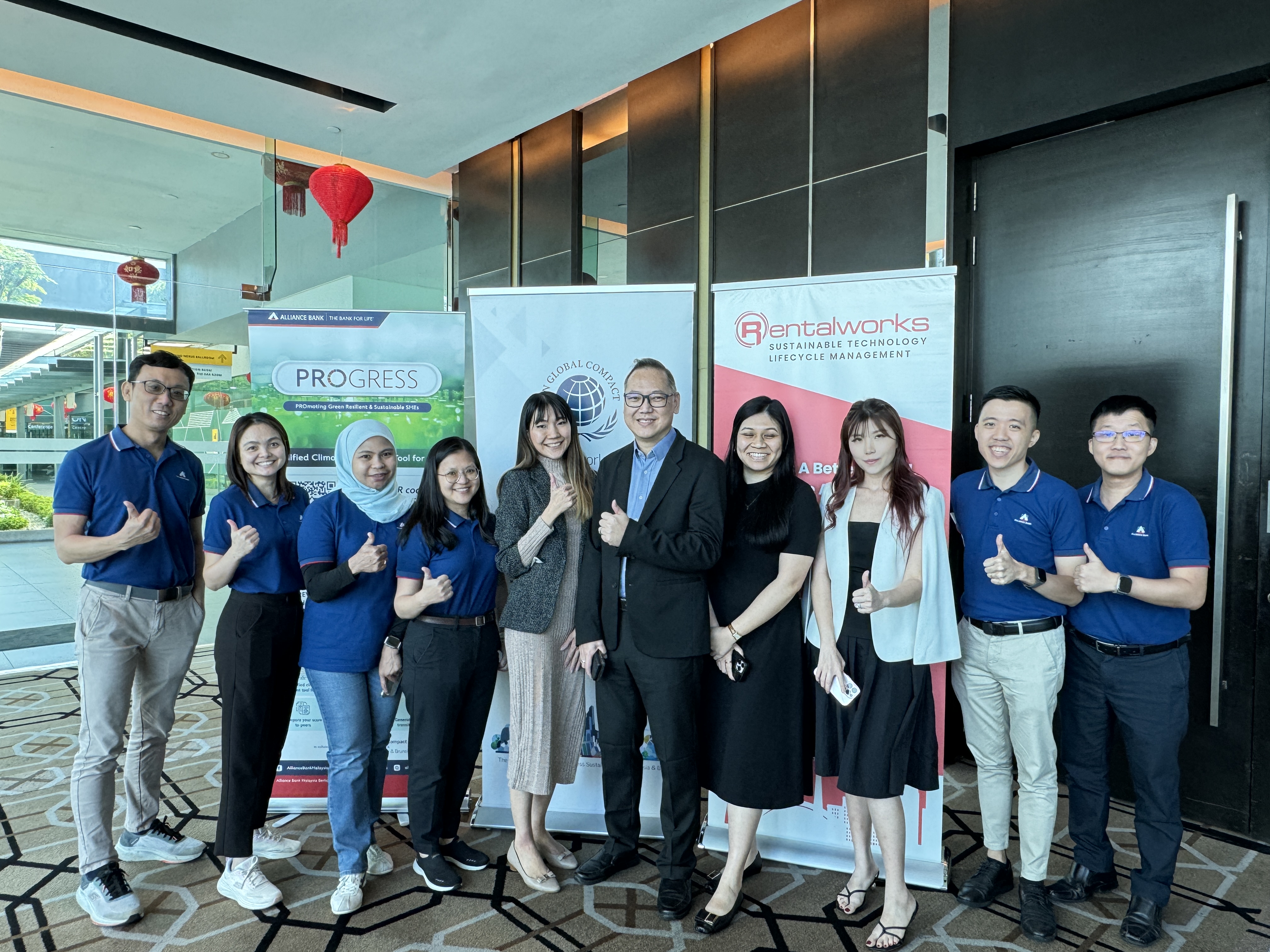
To help SMEs translate interest into action, Alliance Bank partnered with UN Global Compact Network Malaysia & Brunei to develop PROGRESS, a free digital climate assessment and transition planning tool. Designed as a simple entry point, the tool allows SMEs to assess their climate maturity across three areas — Climate Governance, GHG Emissions and Business Integration — and receive both a Climate Maturity Report and a Climate Transition Action Plan. This gave participating companies an initial baseline and a practical roadmap for improvement.
ANSWERS: DELIVERING PRACTICAL SOLUTIONS AND FINANCING
Alliance Bank then linked climate maturity to practical incentives and financing. Through the Sustainability Impact Programme, SMEs could access preferential financing rates tied to their maturity level, creating a mechanism that rewarded progress rather than requiring full ESG maturity from the outset.
The programme combined beyond-banking support with financing solutions in areas such as solar, energy efficiency, waste management and sustainability-linked financing, helping SMEs move from diagnosis to implementation.
While the programme’s sustainability support was positioned broadly for SMEs in Malaysia, financing- related components were channelled through Alliance Bank’s own product offering and financing processes. Alongside direct SME engagement, the Bank also used a supply-chain model to reach SMEs through larger corporates, particularly in sectors where sustainability expectations were increasingly being passed down to suppliers.
4. Overcoming Barriers
Engaging Senior Decision-makers
Securing participation from key decision-makers within corporate client organizations posed a challenge during programme implementation. To address this, Alliance Bank encouraged corporate clients to involve their leadership as speakers at key events. This approach reinforced leadership commitment, enhanced programme credibility, and encouraged broader engagement across supplier networks.
Securing Buy-in From Procurement Teams
Another key challenge was obtaining support from procurement divisions to drive ESG adoption through their supply chains. To address this, the Bank worked closely with corporate clients to demonstrate the strategic value of integrating sustainability leads with corporate value ESG. This alignment helped facilitate buy-in from procurement and opened the door to deeper supplier engagement.
Varying Levels of State Readiness
When expanding programmes regionally, Alliance Bank encountered significant differences in ESG awareness and policy support across states. Through regional strategic partnerships such us the ones mentioned before, the Bank was able to drive and scale the programme effectively across diverse ecosystems.
5. Impacts & Results
From 2023, over 1,000 SMEs have received free climate assessments and transition plans, guiding them toward measurable improvements.
User uptake has doubled year-on-year, reflecting strong SME interest in accessible and practical support.
Supplier climate readiness improved in targeted corporate supply chains. For example, in the EcoWorld supplier programme, 70% of participating SME suppliers improved their climate maturity from “Laggard” or “Beginner” to at least “Intermediate”, “Advanced” or “Leader” level.
Recognition
The Bank has garnered several accolades that underscore its leadership and impact in sustainability and SME banking, including the UNGCMYB Forward Faster Recognition for Partnership for the Goals (2023) and the Best SME Bank in Malaysia (2023) and the Best SME Bank in Malaysia by The Digital Banker (2024 and 2025).
6. Key Lessons Learned
Relevance Is Key to SME Engagement
Framing sustainability in terms of business performance, such as cost savings, operational efficiency, and long-term competitiveness, helped SMEs see ESG as a practical path to business value rather than a compliance burden.
SMEs Need Clear, Practical Guidance
Limited resources and capacity often leave SMEs uncertain about where to begin. Tools like PROGRESS serve as an essential entry point, offering clear guidance and actionable next steps that make it easier for SMEs to move from awareness to implementation.
Strategic partnerships can help companies scale impact faster than they could alone
By working across the wider ecosystem, businesses can combine complementary expertise, expand outreach, and co-develop practical solutions that make complex sustainability challenges more accessible for smaller companies.

"At Alliance Bank, we are very appreciative of the partnership with UN Global Compact Network Malaysia & Brunei. Through our collaborative programmes, we have enabled SMEs to raise sustainability levels and build resilience for the low-carbon economy.”
Roy Heong, Chief Sustainability Officer, Alliance Bank
7. Company Commitment
Alliance Bank has been an active participant of the UN Global Compact since 2022.

8. Recommended Resources
Recommended UN Global Compact Resources


Download Case Study
Disclaimer: This case example is intended strictly for learning purposes and does not constitute an endorsement of the individual companies by the UN Global Compact.