
Hospital Agramont Saving 67 Million Liters of Water through Circular Healthcare
Start Reading

1. Company at a Glance
In this case study, we explore how Hospital Agramont redesigned water management around one of its most resource-intensive clinical services. By recovering water that would otherwise have been discharged, the hospital has combined water resilience with operational efficiency, generating more than 67 million liters in cumulative water savings since 2016 and over Bs 1.3 million in cumulative economic savings.
Healthcare Services
Industry
1955
Founded
El Alto, La Paz, Bolivia
Headquarters
222
Number of Employees
2. The Challenge
Tackling water waste in a highly water-intensive clinical service
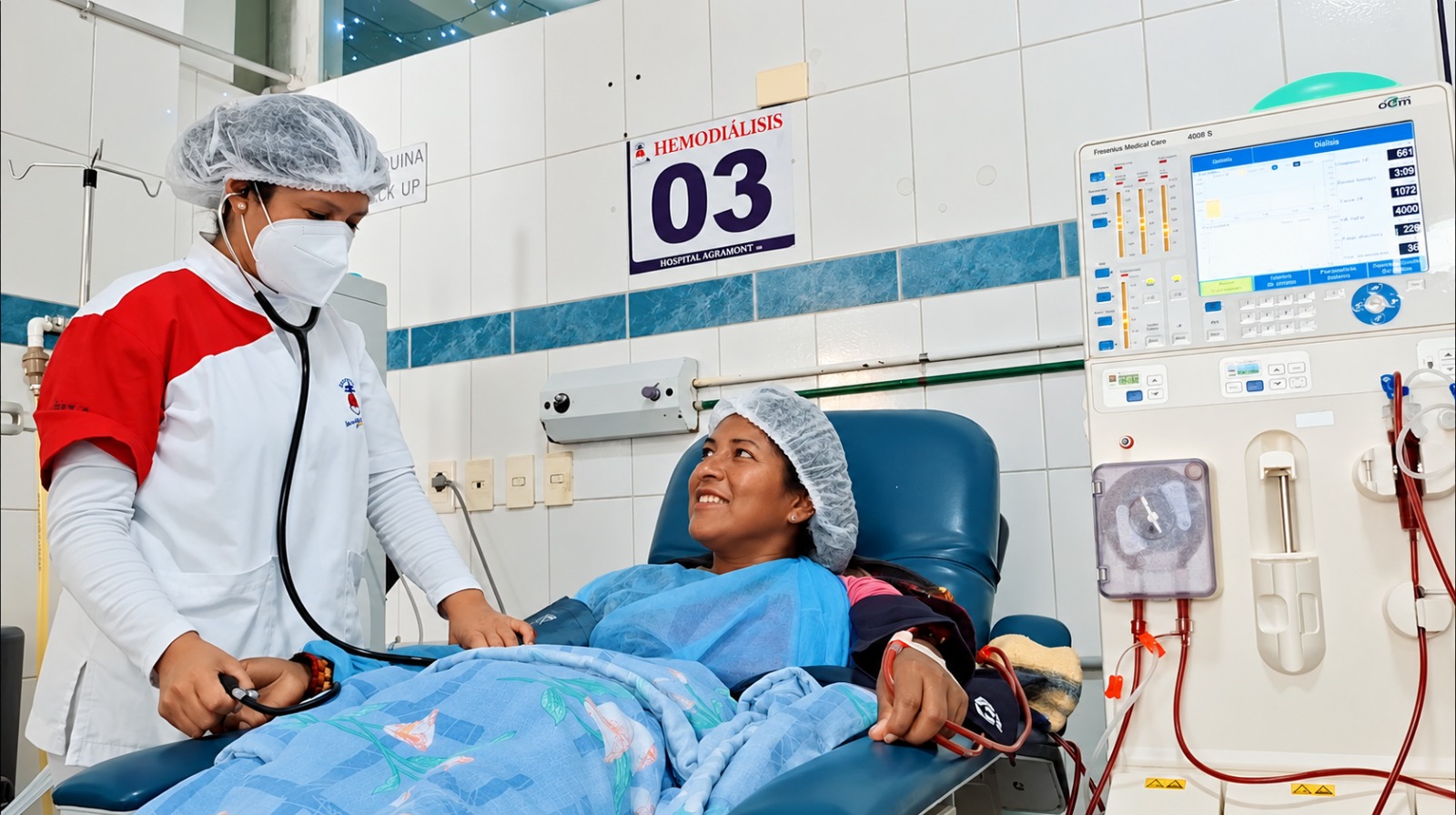
Hemodialysis requires substantial volumes of high-quality water. At Hospital Agramont, a standard session uses approximately 500 liters of incoming water, of which only around 120–200 liters are used as dialysis fluid, while part of that volume is rejected during the reverse-osmosis process and would traditionally be discharged. The scale of the issue was particularly significant because hemodialysis accounted for 94.4% of the hospital’s total water consumption in 2024, 97.2% in 2025 and 96.5% from January to July 2026.
For the hospital, this represented both an environmental challenge and an operational inefficiency. Reducing the use of potable water could lower operating costs and dependence on freshwater resources, but any reuse solution also had to meet the safety requirements of a healthcare environment and prevent cross-contamination. Hospital Agramont therefore set out to recover this previously discarded water and redirect it to suitable non-potable uses, integrating water efficiency into its broader approach to hospital operations.
3. The Action
Building a circular water-reuse system around hemodialysis
MEASURING THE WATER-LOSS OPPORTUNITY
Hospital Agramont began its water-recovery initiative in 2016, initially focusing on understanding where water was being lost within the hemodialysis process and the potential to recover reverse-osmosis reject water for non-potable applications. The hospital quantified total consumption and recovery potential and compared the available recovered-water volume with demand for non-potable uses across the facility, creating the technical and economic basis for the initiative.
ASSESSING WATER QUALITY AND SAFE REUSE OPTIONS
Before defining potential reuse applications, the hospital characterized the recovered water through physical, chemical and microbiological parameters. Technical teams then assessed which non-potable uses could be supplied safely and what treatment and control measures would be required in a healthcare environment.
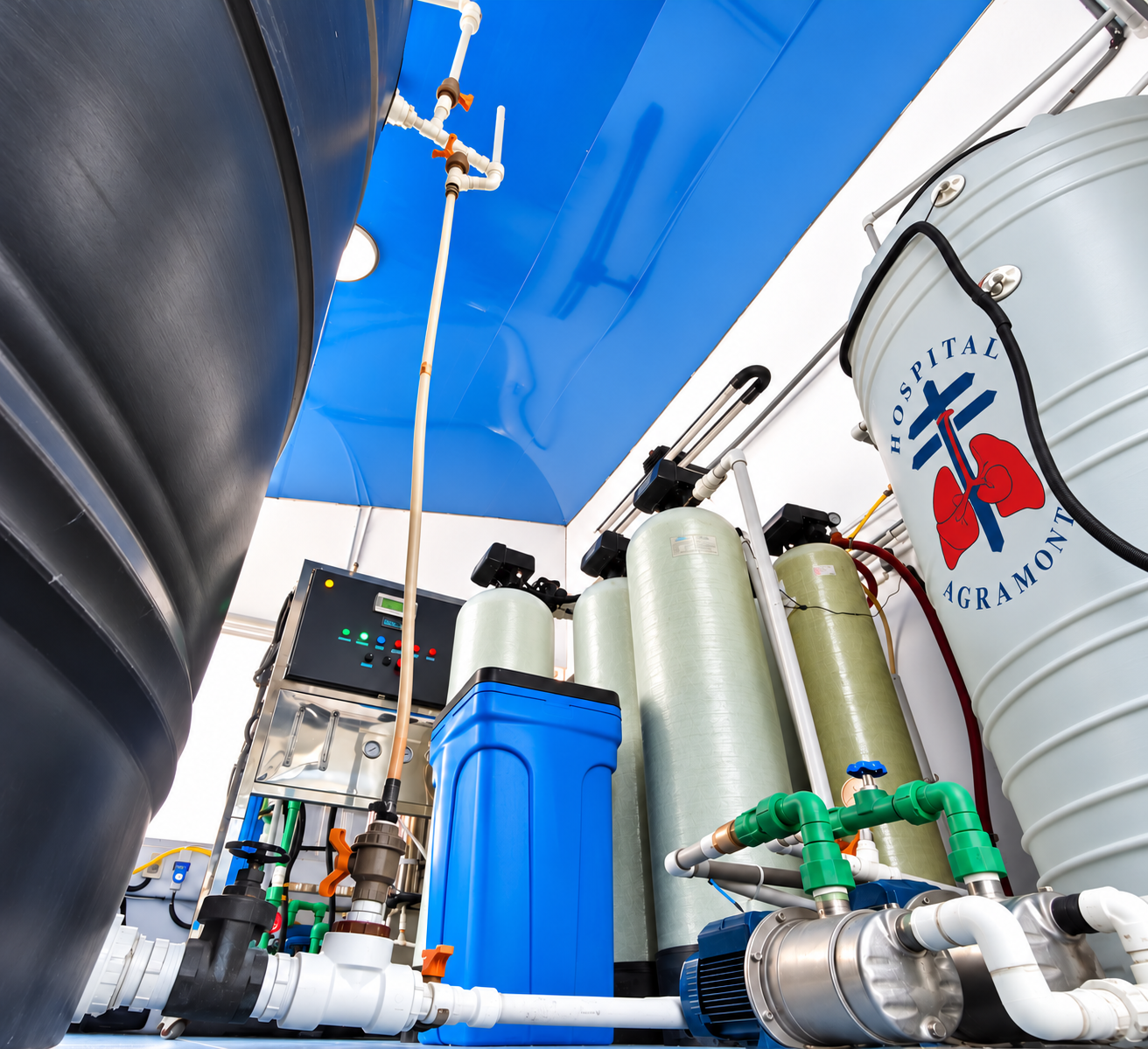
This assessment informed the design of the collection, treatment, storage and distribution system. The project considered treatment options including filtration, reverse osmosis or ultrafiltration, together with UV disinfection or controlled chlorination, depending on the required water quality and end use.
DESIGNING A SEPARATE WATER-REUSE SYSTEM
The hospital designed infrastructure to collect recovered water and redirect it to appropriate non-potable applications. The system incorporated dedicated non-potable piping, storage and distribution components, as well as measures to prevent cross-contamination with the hospital’s potable-water network.
The design also incorporated sampling points, flow-measurement systems and monitoring mechanisms, allowing the hospital to protect water quality, measure performance and continuously learn from the system.
PILOTING THE SYSTEM AND INTEGRATING IT INTO OPERATIONS
The initiative was introduced progressively, including installation and pilot testing before integration into routine hospital operations. Hemodialysis, Operations, Maintenance and Management teams contributed operational knowledge, while hospital leadership provided strategic direction, supported resource allocation and linked the initiative to broader sustainability and operational objectives. External technical specialists and suppliers also supported implementation and system performance.
Technical and operational personnel were trained as part of the implementation process, helping embed the new water-management practices into day-to-day hospital activities.
MONITORING PERFORMANCE AND IMPROVING THE MODEL
Hospital Agramont monitors water quality, recovered volumes and operational performance, alongside environmental and economic outcomes. The initiative follows a continuous-improvement approach, using performance data to identify opportunities to increase recovery, improve efficiency and strengthen the model over time.
4. Next Steps
Scaling and strengthening the model
Hospital Agramont is now focused on increasing water recovery, strengthening measurement and expanding the model to additional non-potable applications where technically and legally appropriate. The next phase includes stronger flow metering, IoT-based monitoring and automated alerts, technical and environmental audits, and improved measurement of the hospital’s water footprint.
The next phase includes targets to reuse at least 70% of wastewater generated by the Hemodialysis Service within 12 months of implementation, reduce potable-water consumption in basic services by at least 30% within 12 months, reduce water and wastewater-management costs by at least 20% within 18 months, and reduce the hospital’s water footprint by 25% within 24 months.
5. Overcoming Barriers
Building the economic case for investment
The initiative required investment in treatment, storage and distribution infrastructure, while the financial return depended on the volume of potable water that could be displaced. Hospital Agramont therefore adopted a progressive approach, assessing investment requirements against expected reductions in potable-water consumption and operating costs and using environmental and economic performance indicators to support further implementation.
Adapting existing hospital infrastructure
Introducing a reuse system into an operating healthcare facility required adapting existing infrastructure for water collection, treatment, storage and distribution without interfering with clinical activities. Hospital Agramont addressed this through progressive implementation and by involving the Hemodialysis, Operations and Maintenance teams in the technical design and integration of the system.
Ensuring safe water reuse
The main technical challenge was determining whether recovered water could be safely reused and for which applications. The hospital responded by characterizing water quality, defining treatment requirements, establishing monitoring parameters and introducing measures to prevent cross-contamination.
6. Impacts & Results
In 2024, Hospital Agramont recovered and recycled 6,339 m3 (6.34 million liters) of water, equivalent to 75.5% of the hospital’s total recorded water consumption of approximately 8,395 m3 that year. in 2024, equivalent to 6.34 million liters. The recycling rate remained at approximately 75% in 2025 and from January to July 2026.
12.84 million liters of water were recycled in 2024–2025, increasing to 16.11 million liters when January–July 2026 is included.
Bs 350,110.9 in estimated avoided water costs from 2024 to July 2026, including Bs 127,505.7 in 2024, Bs 146,442 in 2025 and Bs 76,163.2 in the first seven months of 2026.
Greater employee awareness of water efficiency, with staff identifying additional opportunities to improve resource management across hospital operations.
Greater technical collaboration around water management, with internal teams and external specialists contributing to solutions adapted to the requirements of a healthcare environment.
Greater employee awareness of water efficiency, with staff identifying additional opportunities to improve resource management across hospital operations. Positive qualitative feedback from patients, visitors and the wider community regarding the hospital’s environmental and social responsibility.
7. Key Lessons Learned
Establish the baseline before designing the solution
Detailed measurement of water volumes, costs and recovery potential should come before investment decisions. Hospital Agramont concluded that a stronger baseline from the outset would have made it easier to assess performance and demonstrate the environmental and financial value of the initiative.
Involve all operating teams from the design stage
Bringing infrastructure, maintenance, operations and environmental teams into the process early can accelerate decisions and make implementation easier.
Define KPIs and automated monitoring from day one
Introducing flow meters, real-time monitoring and a complete KPI framework at the beginning makes it easier to compare results against the baseline, identify deviations and optimize the system over time.
"Sustainability becomes sustainable when it is integrated into core operations and creates value for both the organization and the environment.”
Gloria Cleofe, Agramont Carrillo General Manager
8. Company Commitment
Hospital Agramont has been a commited participant in the UN Global Compact since 2024 and has engaged in the following initiatives:
Participant in the Target Gender Equality Accelerator
Signatory of the CEO Water Mandate
Listed for the Climate Ambition Accelerator
8. Recommended Resources
Recommended UN Global Compact Resources


Download Case Study
Disclaimer: This case example is intended strictly for learning purposes and does not constitute an endorsement of the individual companies by the UN Global Compact.