
Empowering 17,000 Recyclers: How Aceros AZA Closed the Loop for Sustainable Steel
Start Reading

1. Company at a Glance
In this case study, we will explore how AZA Contigo not only strengthens its business by ensuring a stable supply of recycled scrap but also creates social impact by empowering base recyclers. Through a comprehensive approach that combines economic support, training, and circularity practices, this initiative fosters both business growth, environmental impact and community development.
Aceros AZA is a leading steel producer in Chile, specializing in manufacturing steel products from recycled ferrous scrap. With an annual production capacity of almost 600,000 tons, the company set a goal to source 21% of its raw materials from base recyclers across the country by 2025—an objective it successfully achieved a year ahead of schedule, in 2024.
Manufacturing
Industry
1953
Founded
600+
Number of Employees
Santiago de Chile
Headquarters
2. The Challenge
Ensuring a Stable and Sustainable Supply Chain Through Recycler Empowerment
Aceros AZA processes over 600,000 tons annually of ferrous scrap to manufacture its products. The company relies heavily on base recyclers to sustain its operations. However, base recyclers—often informal workers—face economic instability, lack of formal business structures, and market fluctuations. Supporting their development is essential for AZA to ensure a stable supply chain, meet environmental goals, and contribute to the country’s circular economy. The challenge was to integrate these recyclers into a sustainable business ecosystem while aligning with AZA’s commitment to environmental and economic sustainability.
3. The Action
The company developed the programme Aza Contigo. The initiative goes beyond transactional relationships, fostering the inclusion andprofessionalization of base recyclers through a structured, long-term strategy focused on economic empowerment, training, and circular economy principles. Their approach is built on three core pillars:
Economic Stability and Market Access
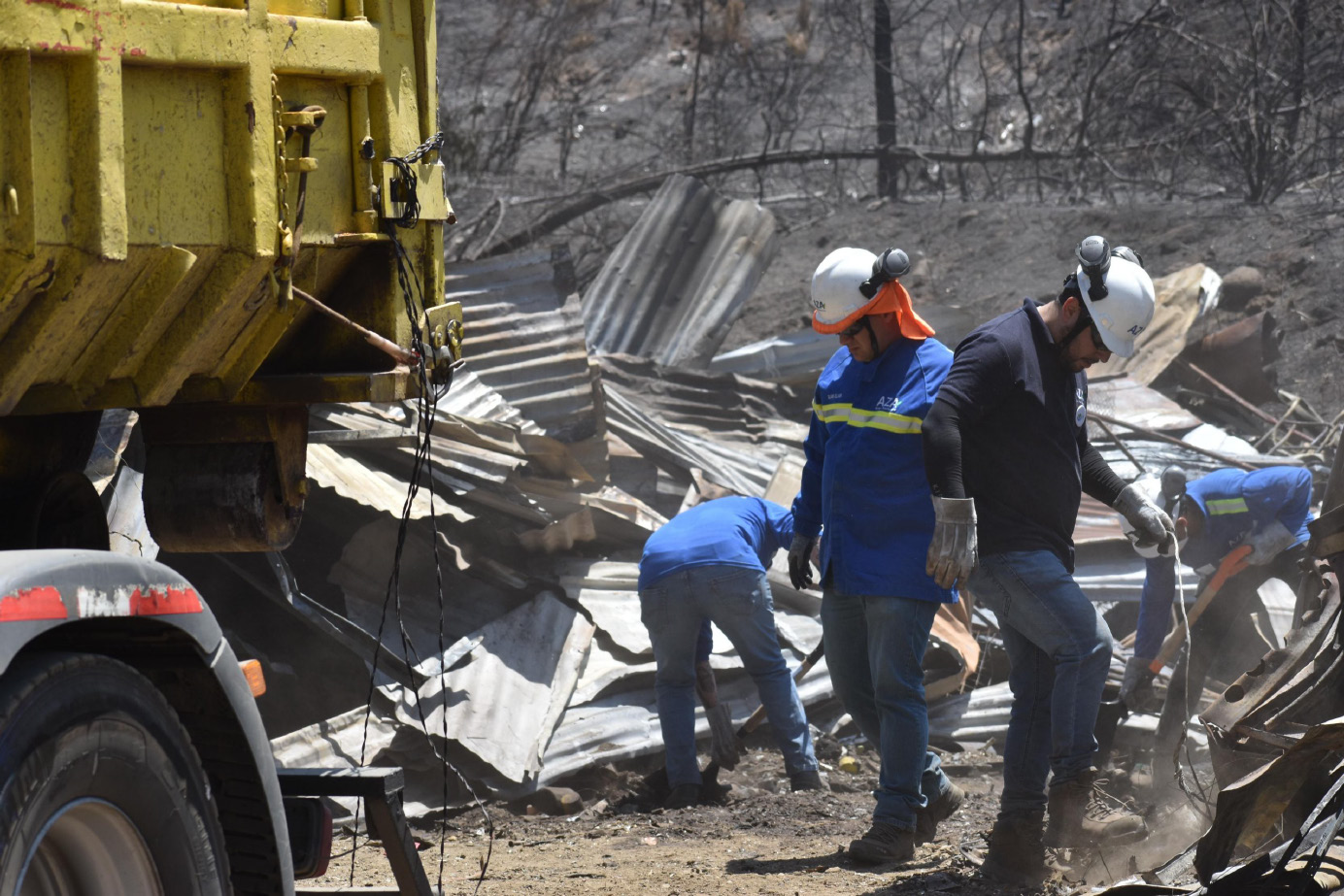
The company provides a stable pricing model, ensuring recyclers receive a guaranteed minimum price and fast payments within 24 hours. Additionally, it eliminates intermediaries, enabling recyclers to sell directly to AZA and access a reliable market that values their contribution. This ensures a more equitable and dignified income source, improving recyclers' financial security.
Training, Recognition and Professionalization
To strengthen their role as key players in the circular economy AZA offers offer capacity-building programs in areas such as business administration, digitalization, and safety practices. Through partnerships with government institutions and experts, AZA Contigo also provides certification programs, which helps position recyclers as formalized entrepreneurs. The initiative further enhances their social recognition and reinforces their role as environmental agents in waste management.
Circularity and Sustainability Impact
AZA Contigo closes the recycling loop by integrating collected scrap back into steel production, manufacturing AZA Green Steel with one of the lowest carbon footprints in the world according to World Steel Association reports. This not only prevents thousands of tons of waste from reaching landfills but also reduces emissions, energy use and resource depletion, thus demonstrating the power of an inclusive economic model.
4. Overcoming Barriers
AZA identified that resistance from base recyclers to legally formalize themselves served as a crucial barrier, due to additional costs to their operation like taxes and other expenses. Therefore, the challenge has been to effectively show base recyclers all the benefits and growth opportunities that formalization would provide.
5. Impacts & Results
Increased Scrap Collection
In 2024, recyclers recovered 188,887 tons of scrap—equivalent to 21% of AZA’s total input. All recovered material was reintegrated into the company's production processes.
Economic Growth
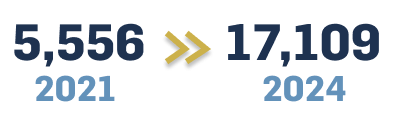
The program expanded significantly, from 5,556 enrolled recyclers in 2021 to 17,109 in 2024.

Community Development
Strengthened the livelihoods of recyclers by promoting local economic growth and supporting job creation.
Emissions
AZA produces only 0.18 tons of CO2 per ton of steel—well below the global industry average of 1.91 and the 0.67 average for companies with similar profiles.
Environmental Impact
Reinforced and effectively implemented recycling practices that were integral to achieving national environmental goals.
6. Key Lessons Learned
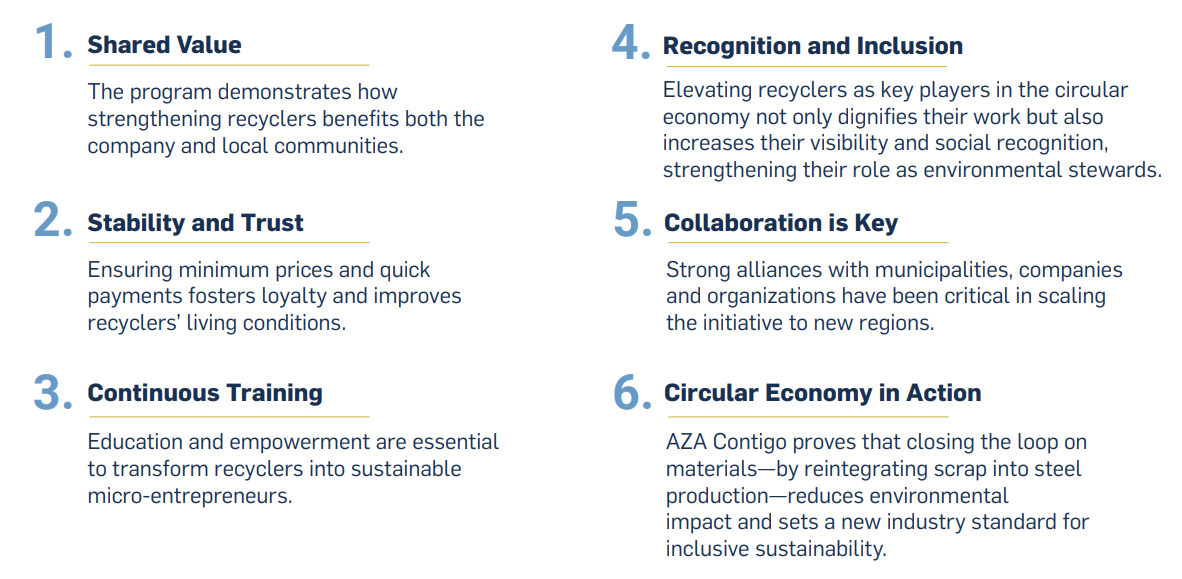

"Empowering base recyclers is not just about inclusion; it is about redefining the way we approach sustainability. Through AZA Contigo, we are building an ecosystem where recyclers gain economic stability, access to training, and a direct role in the circular economy. Their work is essential to reducing waste, promoting circularity, and creating a greener future for Chile.”
- Julio Andres Manterola Serey, Head of Sustainability and Communications
7. Company Commitment
AZA has been a committed participant in several UN Global Compact initiatives:
Business Ambition for 1.5°C Campaign
Forward Faster Signatory Climate Action Target 1
Net-Zero Commitment
8. Recommended Resources
Inspired to take action?
Explore recommended UN Global Compact resources to support your journey:

Forward Faster Initiative

E-Learning Course: Introduction to Just Transition

E-Learning Course: Advancing decent work in business through the UN Global Compact Labour Principles
Aceros AZA’s integrated approach ensures long-term stability and pioneers a new standard in sustainable steel production.
Download Case Study
Disclaimer: This case example is intended strictly for learning purposes and does not constitute an endorsement of the individual companies by the UN Global Compact